
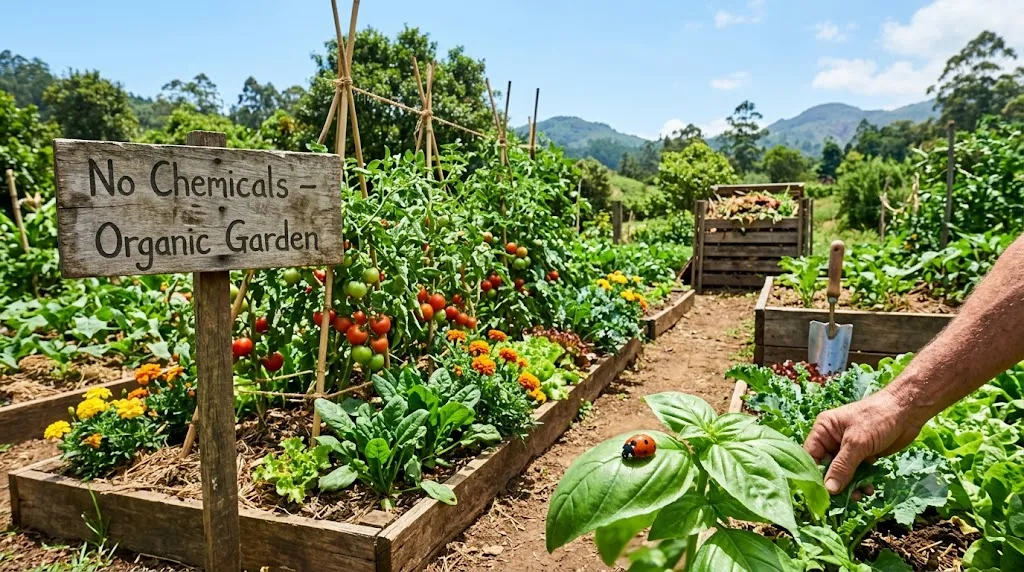
If you are tired of synthetic sprays, embracing chemical-free gardening is the best way to cultivate a thriving, eco-friendly backyard. Many gardeners assume that chemical-free gardening is difficult, but by following these 7 powerful steps, you can create a balanced ecosystem where your plants flourish naturally. Learn how to master chemical-free gardening and protect both your harvest and the planet
Growing without pesticides or chemicals isn’t just a feel-good choice; it’s better for the planet, better for pollinators, and often better for your body too. It focuses on working with nature, not against it, using sustainable methods to nourish your soil, plants, and local wildlife.
Why Choose Chemical-Free Gardening?
Chemical-free gardening works on the principle of controlling pests rather than eliminating them, helping you create a balanced ecosystem over time.
A fundamental feature is reliance on manures and fertilisers derived only from animal or plant remains, conserving natural resources and avoiding pollution. Organic produce is not only better for the environment but also has a superior taste and is more nutritious.
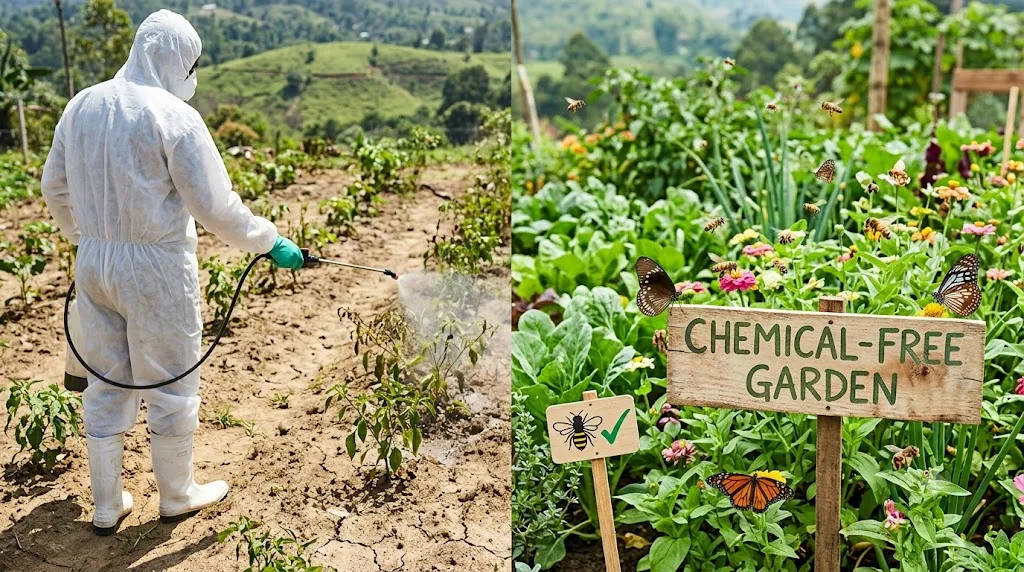
Step 1: Feed the Soil, Not the Plants
The foundation of any chemical-free garden is rich, living soil. Healthy soil equals healthy plants, and robust plants naturally resist pests and diseases better than stressed ones.
Learn more at Gardeners’ World
How to Improve Soil Naturally:
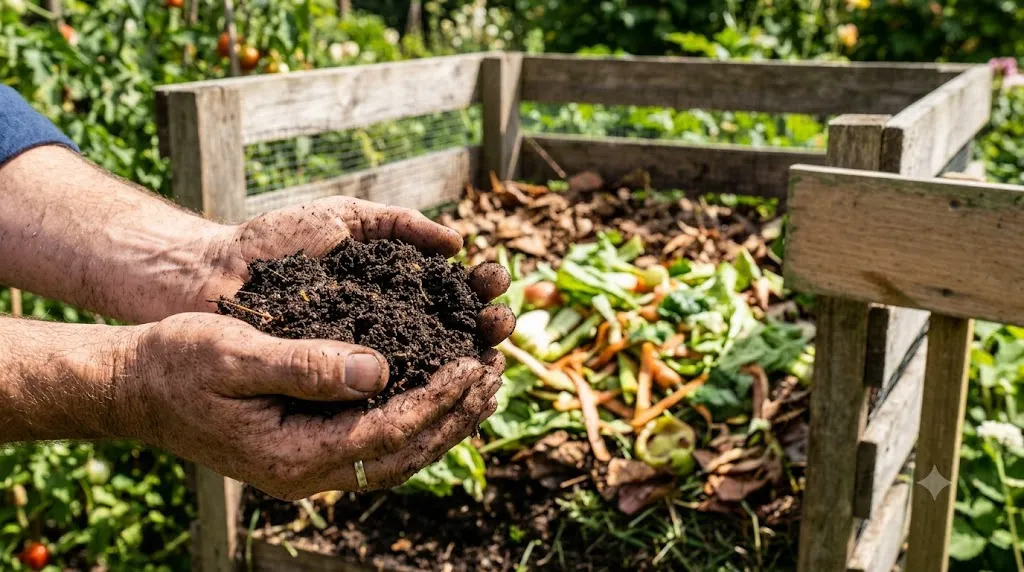
- Start a Compost Pile: Compost is the best soil conditioner and slow-release plant food you can use—and it’s free to make! It encourages beneficial soil organisms, builds fertility, and improves structure in any soil type.
- Green Manures: Include these in your vegetable cropping plan to help soil fertility by replacing nutrients and smothering weeds.
- Mulch: Use homemade compost, leaf mould, grass clippings, or shredded leaves as mulch to retain moisture, suppress weeds, and gradually release nutrients as they break down.
Pin-worthy tip: “An organic garden relies on good soil health. Feed your soil, and your plants will thank you.”
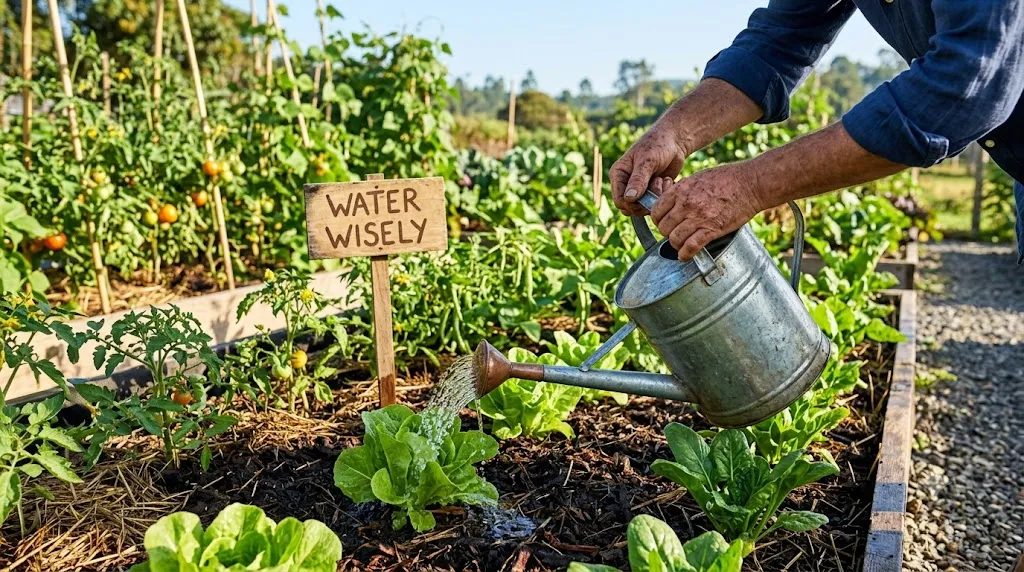
Step 2: Water and Care Wisely
Good growing conditions are your first line of defence against pests and diseases.
- Timely watering is important. Avoiding extremes—like letting soil dry out completely or keeping it waterlogged—creates a stress-free environment for your plants.
- Spacing: Careful plant spacing promotes airflow, which can reduce fungal diseases.
- Timing: Seeds do not like to sit in wet, cold soil, so wait until there are signs that the soil is warming up before sowing. Early sowings that have struggled to germinate are often prone to disease.
Step 3: Growing the Right Plants for Your Conditions
Choose the right plants for your specific garden conditions, and your job becomes much easier.
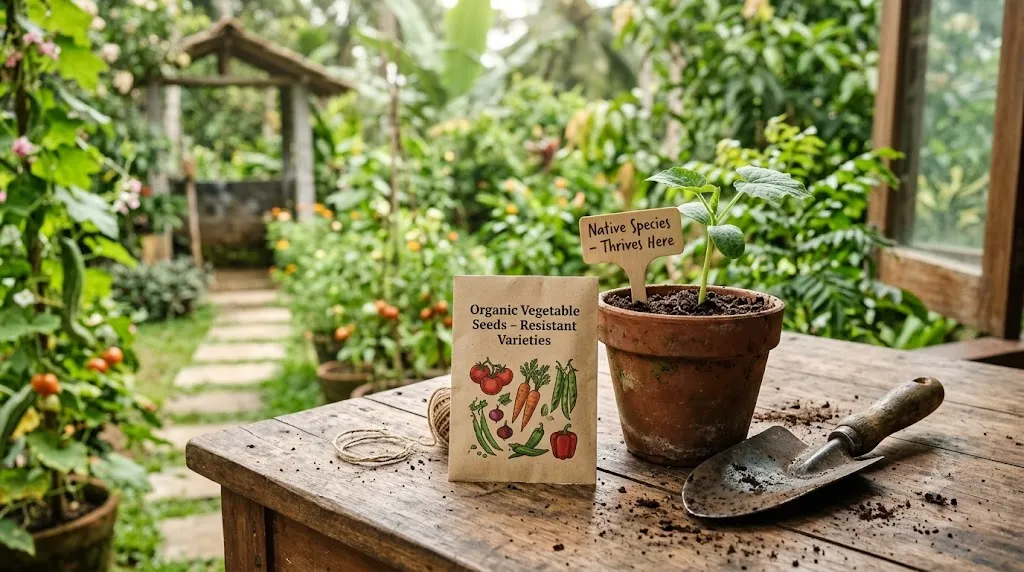
- Choose Resistant Varieties: When shopping for seeds and plants, look for resistant varieties and use organic seeds whenever possible.
- Native Species: Heritage vegetable varieties and native species often do better without synthetic help and are more resilient to local pests.
Step 4: Natural Pest Control Methods
Instead of reaching for a spray bottle, embrace the predators that want to eat your pests.
Companion Planting
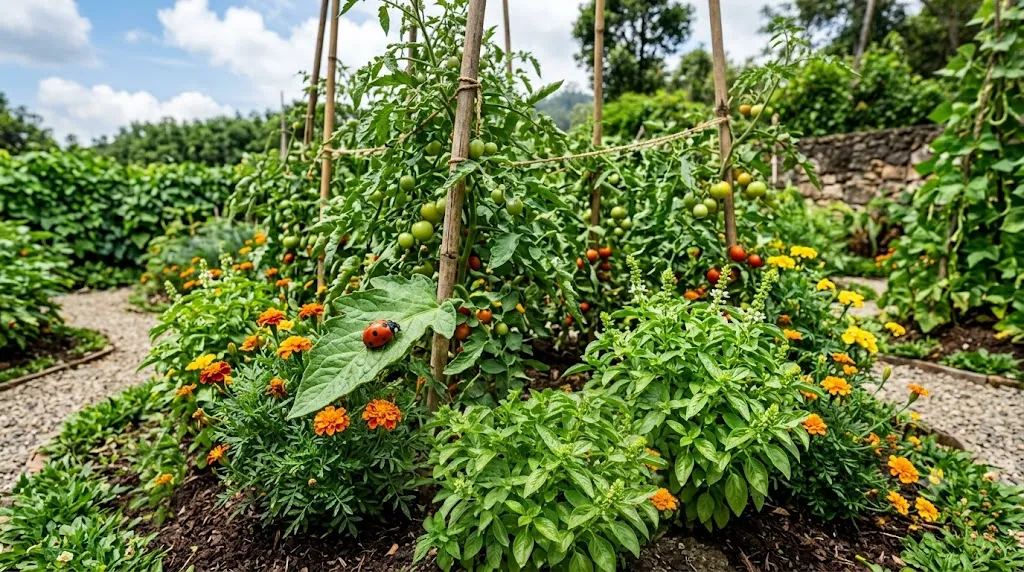
Companion planting is about plants helping each other. It involves growing two different plants in close proximity to benefit each other. These “talking plants” can communicate with each other, and fragrant plants like bush basil can actually help nearby plants develop their own defences against pests.
- Bush Basil: A recent study found that planting bush basil near green beans could be a cost-effective, natural alternative to chemical repellents. The fragrant herb helped the beans develop their own defenses against spider mites and also attracted pests’ natural enemies.
- Marigolds: These are a classic companion plant. They can deter whitefly, while other companion plants can encourage other insects to eat existing pests.
- Aromatic Herbs: Strongly scented herbs repel pests.
Physical Barriers and Traps
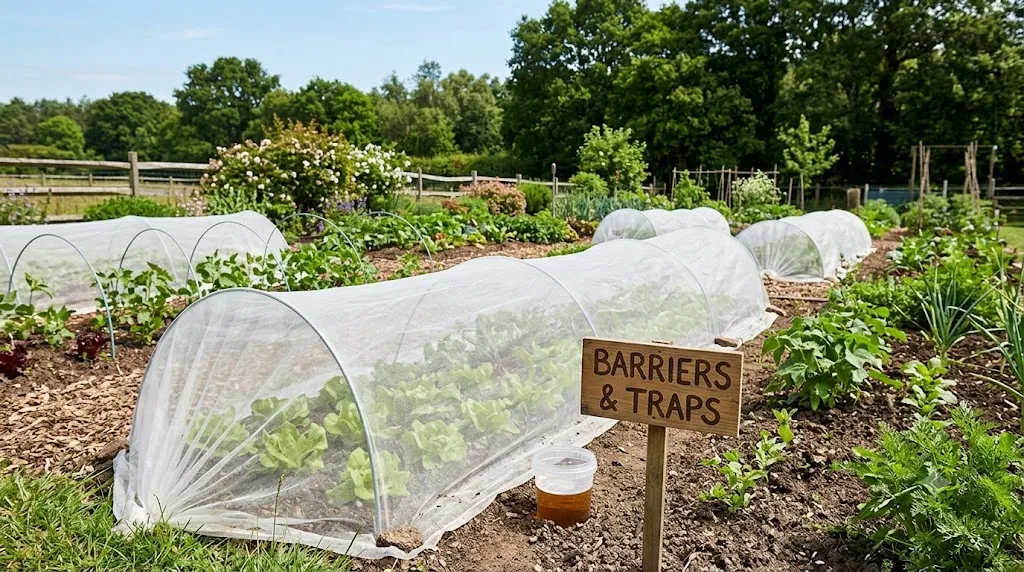
- Barriers: Use insect-proof mesh to exclude root pests of vegetables and other barriers like row covers.
- Handpicking: For larger pests, remove them by hand. If you’re squeamish, knock them into a bucket of soapy water. Try to visit your garden daily to check for any signs of trouble.
- Traps: Use pheromone traps or sticky traps to attract and capture offending insects. Slugs can’t resist a saucer of beer.
Biological Controls
Biological controls are especially valuable and can be an effective alternative to chemicals.
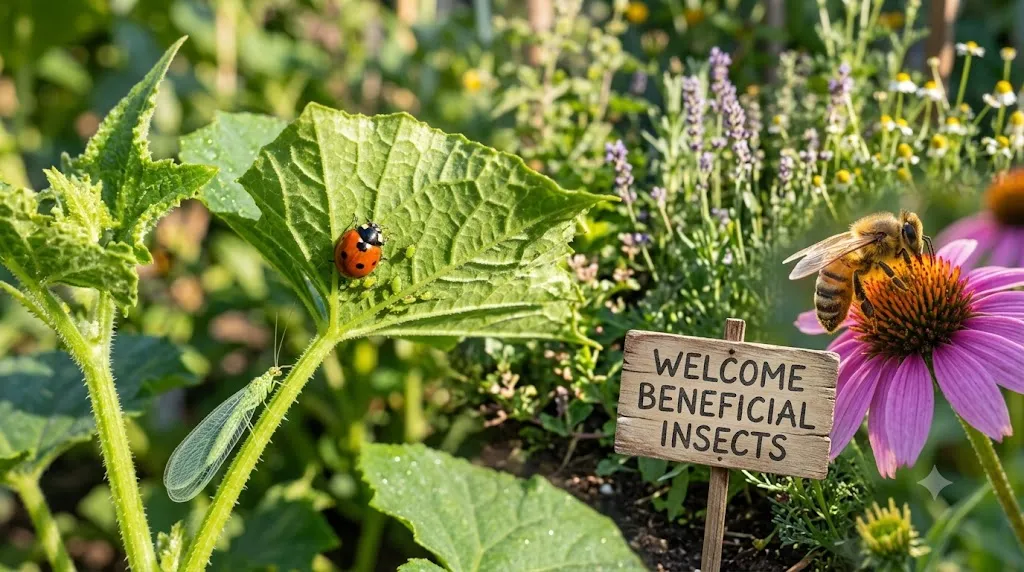
- The Good Guys: Encourage ladybirds, lacewings, and hoverflies by planting pollen-rich plants and giving them somewhere to spend the winter. They will happily eat your aphids.
- Hedgehogs and Frogs: Build a pond to attract frogs or make your garden hedgehog-friendly; they’ll happily eat your slugs.
- Parasitoid Wasps: These tiny beneficial insects help control a huge range of pests, including aphids, cutworms, hornworms, and imported cabbage worms.
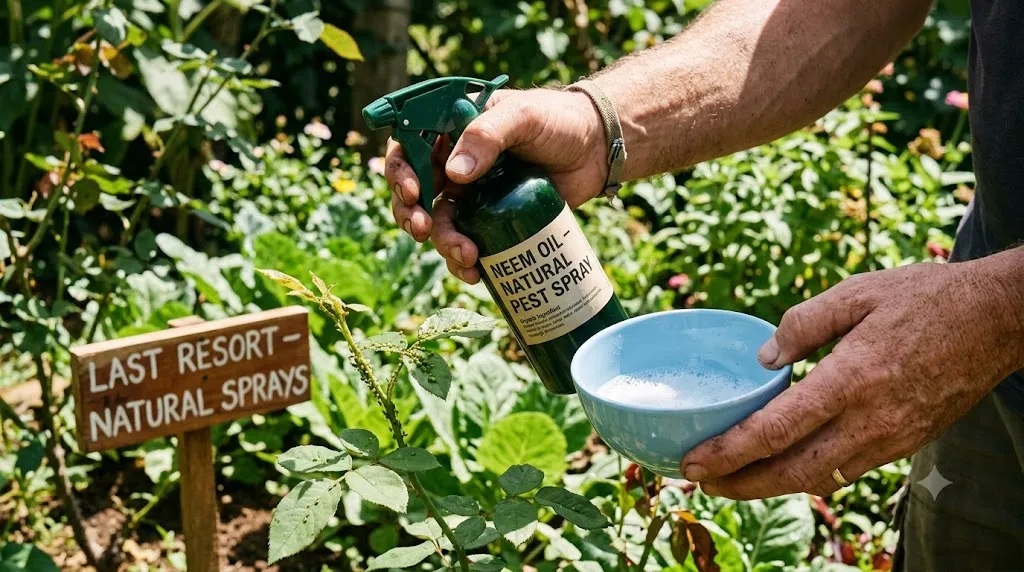
Organic Sprays as a Last Resort
When absolutely essential, certain natural pest and disease control materials are often acceptable. These have short persistence and low toxicity to birds and mammals. Even these relatively benign substances must be used as directed on the label.
- Natural Sprays: Making natural sprays from garlic, neem oil, or soap can help control insects.
- Soapy Water: A weak solution of soapy water on infected areas can be used to deter pests. This should be done at night when insects are not active and should not be put on flower heads.
Step 5: Weed Control Without Chemicals
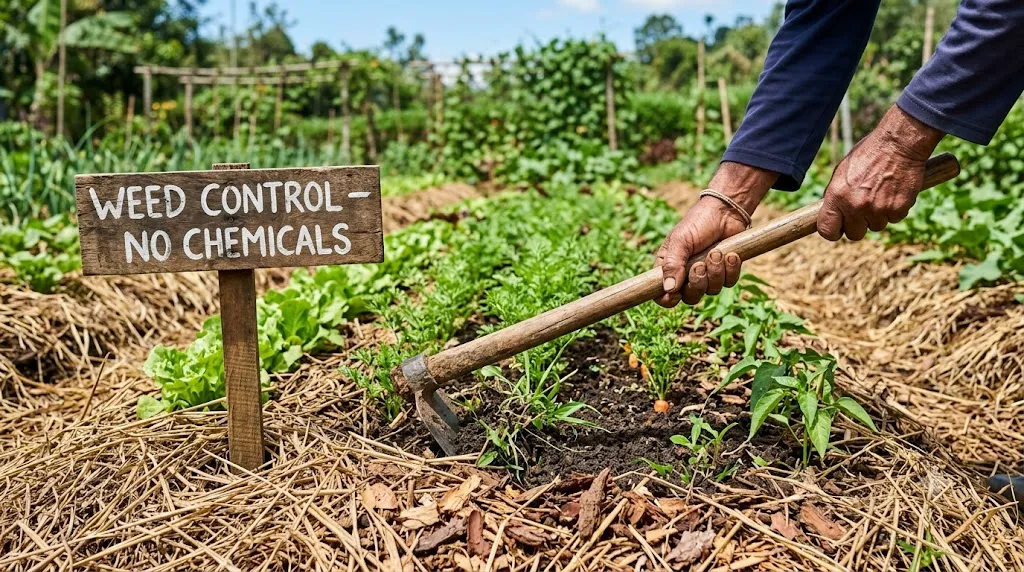
Without the fallback of potent weedkillers, it’s advisable to tackle the problem before heavy infestations develop.
- Cultivation: Meticulous forking out of weeds and hoeing are potent killers of annual weeds. Hoe as often as the weather allows when the soil surface is dry.
- Mulching: Deep layers (5-8 cm) of organic matter prevent annual weeds.
- Prevention: Prevent weed seed dispersal by cutting them down before they get to this stage if they cannot be removed completely.
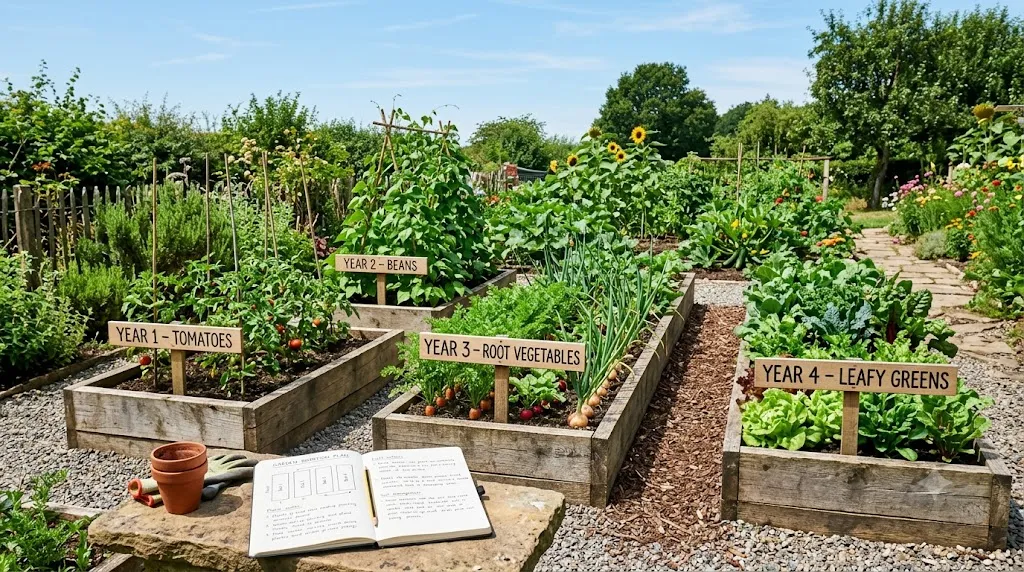
Step 6: Rotate Your Crops
If this is not your first year of gardening, do not grow the same plants in the same garden bed year after year. Rotating planting areas prevents your soil from being depleted of the same nutrients each season and helps to head off diseases and break the cycle of insect infestation.
Pin-worthy tip: “Crop rotation ensures better results and helps prevent a build-up of pests and diseases. It’s a classic organic principle.”
Quick Reference: Chemical-Free Gardening at a Glance
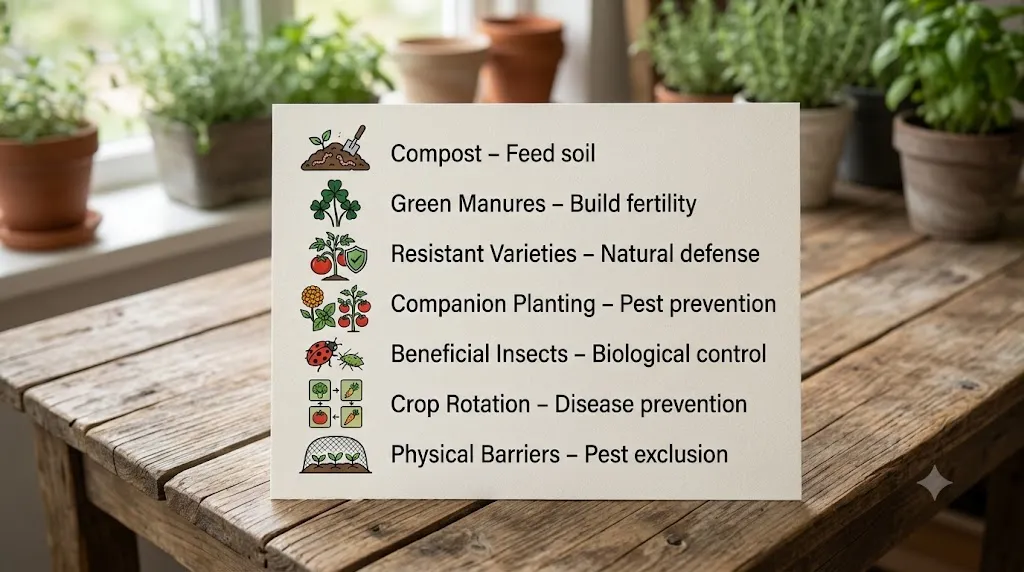
| Practice | Why It Works |
|---|---|
| Compost | Feeds the soil, improves structure, and provides slow-release nutrients. |
| Green Manures & Mulches | Smothers weeds, feeds the soil, and builds fertility. |
| Resistant Varieties | Plants that are naturally better at fending off pests. |
| Companion Planting | Plants that protect each other; fragrant herbs can repel pests or boost defenses in neighbouring plants. |
| Beneficial Insects | Biological controls like ladybugs and lacewings that eat pests for you. |
| Crop Rotation | Prevents a build-up of pests and diseases in the soil. |
| Physical Barriers | Keeps pests away from plants without chemicals. |
Let’s Talk About Your Chemical-Free Garden
Now I want to hear from you. What’s your biggest challenge when it comes to gardening without pesticides or chemicals? Are you worried about pests, soil health, or just knowing where to start? Drop a comment below or tag @ouladeco on Pinterest with a photo of your garden.
And if this guide helped you, save it, share it with a fellow gardener, and come back to Oula Deco for more sustainable gardening inspiration. A safer, healthier garden is closer than you think—without the chemicals.
You Might Like How to Create a Zero-Waste Garden

