
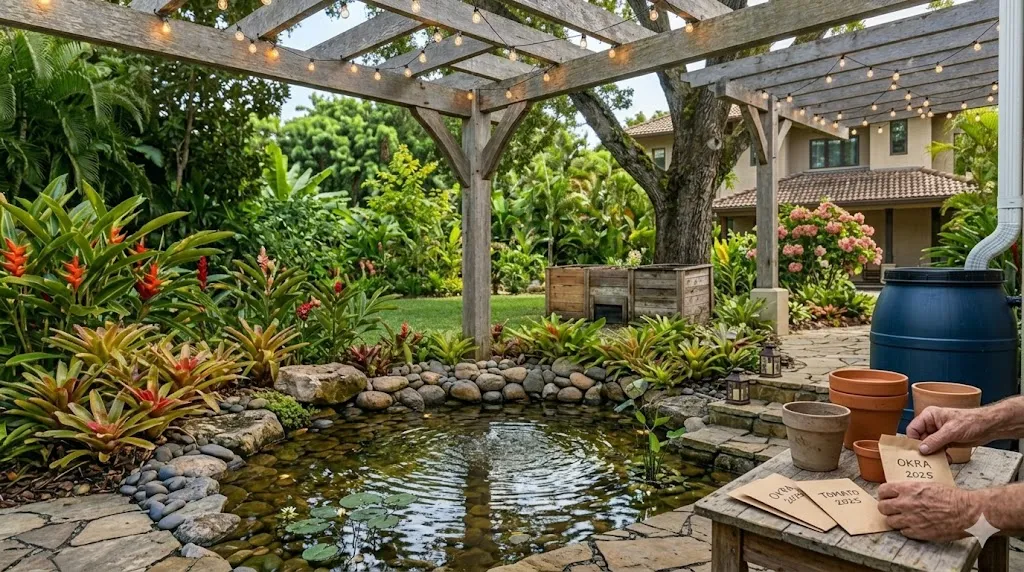
How to create a zero-waste garden. 5 simple steps to grow food sustainably and reduce waste. Read more on Oula Deco.
You want to grow your own food. But you’ve noticed how much waste comes with gardening – plastic seed trays, bagged soil, chemical fertilisers, and produce wrapped in plastic at the store.
What if your garden could produce zero waste? What if it could actually consume the waste your household creates?
Here’s the truth: how to create a zero-waste garden is easier than you think. It’s not about perfection – it’s about small changes: composting kitchen scraps, saving seeds, reusing containers, capturing rainwater, and ditching chemicals.
I’ve gathered 5 practical steps to transform your garden into a closed-loop system that feeds your soil, saves you money, and sends almost nothing to the landfill.
By the end of this guide, you’ll know exactly how to garden in harmony with nature – not against it.
Let’s dive into how to create a zero-waste garden – one sustainable step at a time.
1. Start a Compost System – Turn Scraps into Soil
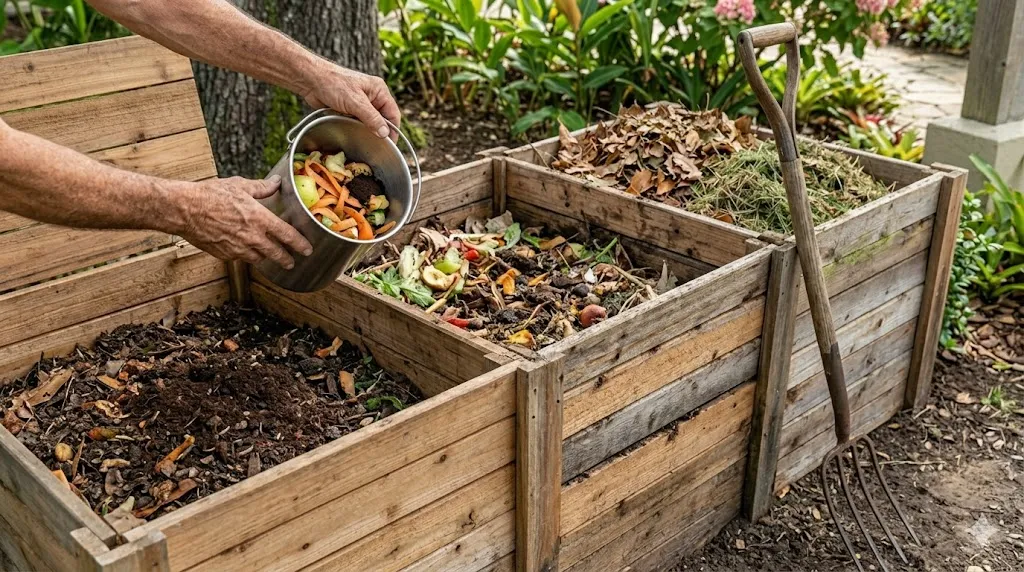
The heart of a zero-waste garden is compost. Instead of throwing away vegetable peels, coffee grounds, eggshells, and yard waste, you turn them into black gold for your soil.
Why it’s essential for a zero-waste garden:
Composting diverts up to 30% of household waste from landfills. It also creates a free, nutrient-rich soil amendment – no need to buy bagged fertiliser.
What you can compost:
- Kitchen scraps: fruit and vegetable peels, coffee grounds, tea bags, eggshells
- Yard waste: grass clippings, dry leaves, small twigs
- Other: shredded paper, cardboard, wood ash (small amounts)
What NOT to compost:
- Meat, dairy, oils, diseased plants, pet waste
How to start:
- Outdoor bin: A simple wire bin or wooden pallet box in a corner of your garden.
- Tumbler: A rotating bin that speeds up decomposition.
- Vermicompost (worms): Perfect for small spaces or apartments.
Pro tip: Aim for a mix of “greens” (nitrogen-rich – kitchen scraps and grass clippings) and “browns” (carbon-rich – dry leaves and cardboard). A 50/50 ratio prevents odours and speeds up composting.
Pin-worthy tip: “Compost is nature’s recycling centre – feed it your scraps, and it feeds your garden.”
This is the first and most important step in how to create a zero-waste garden.
2. Collect Rainwater – Free Water for Your Plants
Tap water is treated, chlorinated, and expensive. Rainwater is free, natural, and better for your plants. Collecting it reduces your water bill and your environmental footprint.
Why it’s essential for a zero-waste garden:
Rainwater harvesting reduces demand on municipal water supplies and avoids the energy used to treat and pump tap water.
What you need:
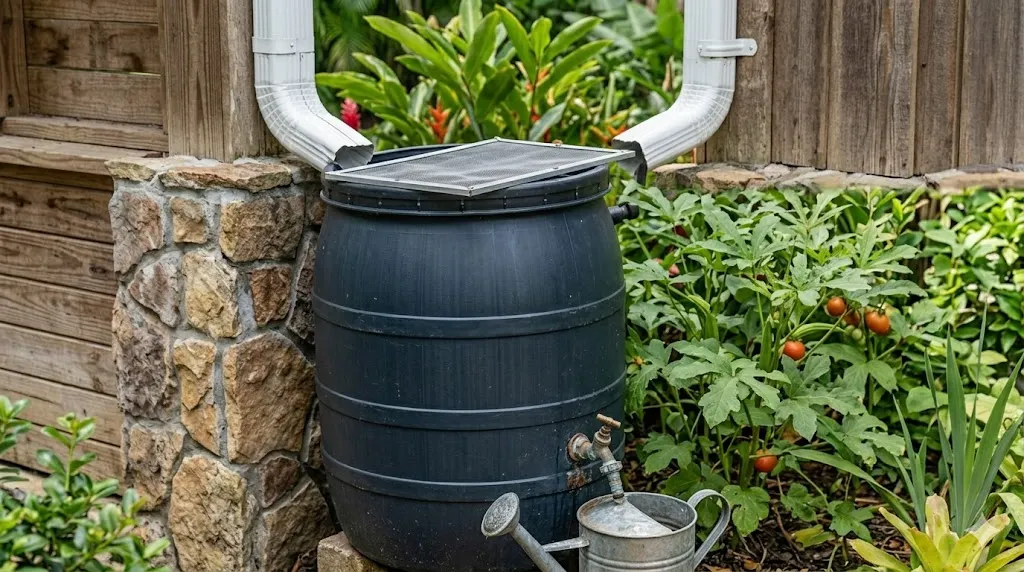
- A rain barrel (or several) placed under downspouts
- A diverter to direct water from the gutter into the barrel
- A screen to keep out mosquitoes and debris
- A spigot for filling watering cans
How to start:
- Place a barrel under a downspout near your garden.
- Use the water for vegetables, flowers, and containers.
- In dry spells, supplement with tap water – but use rain first.
Pro tip: Elevate your rain barrel on cinder blocks or a wooden stand – gravity will give you better water pressure. Add a mesh screen and a tight lid to prevent mosquitoes and algae.
Pin-worthy tip: “Rain is free – catch it, store it, and let it feed your garden.”
Among ways to create a zero-waste garden, rainwater harvesting saves money and resources.
3. Save Seeds – Grow Again Without Buying
Seed packets cost money and come in plastic-lined envelopes or foil packs. Saving your own seeds eliminates that waste and creates plants perfectly adapted to your garden.
Why it’s essential for a zero-waste garden:
Seed saving closes the loop – you grow food, harvest seeds, and plant them next year. No packaging, no shipping, no cost.
Easy seeds to save for beginners:
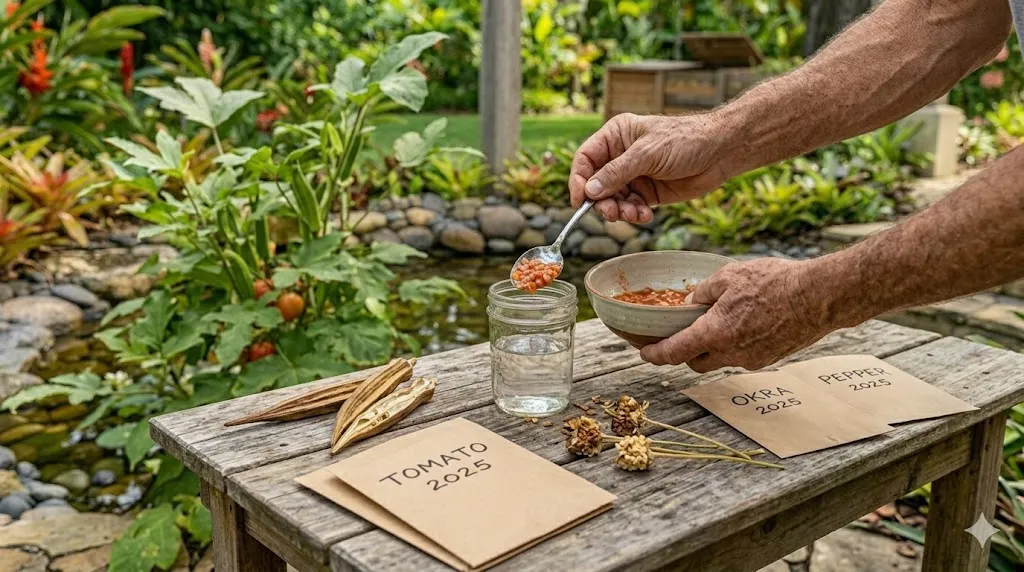
- Tomatoes (scoop out seeds, ferment in water for 3 days, dry on a paper plate)
- Peppers, beans, peas (let pods dry on the plant, then shell)
- Lettuce, basil, cilantro (let plants flower and collect dry seeds)
How to store seeds:
- Dry seeds completely (spread on a plate for 2 weeks).
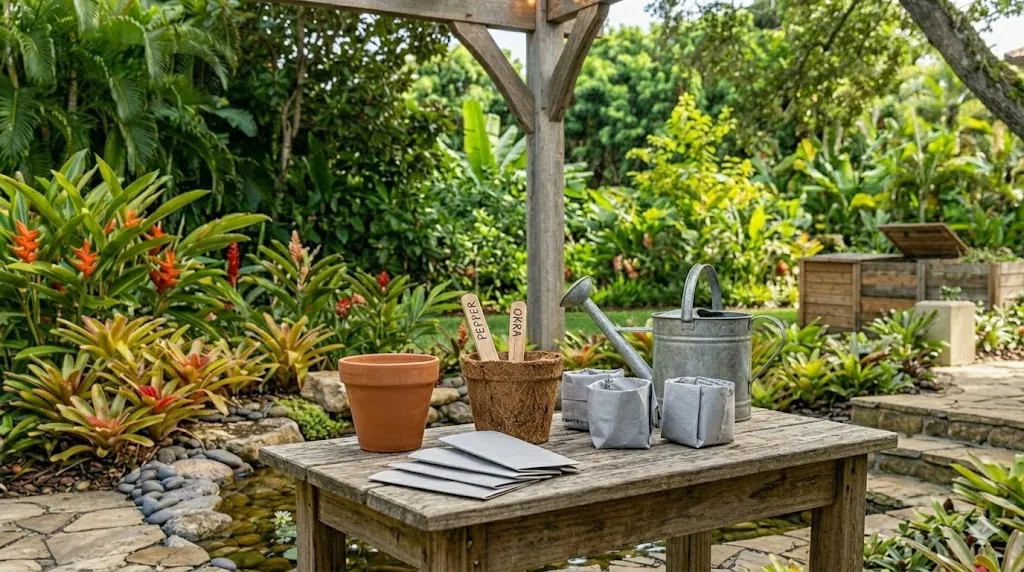
- Store in paper envelopes or glass jars (not plastic).
- Label with the plant name and year.
- Keep in a cool, dark, dry place.
Pro tip: Only save seeds from open-pollinated or heirloom plants – hybrid seeds won’t grow true to type. And leave plenty of seeds for the birds and next year’s planting.
Pin-worthy tip: “A single tomato can give you 100 seeds – and 100 future tomato plants.”
This is a core practice in how to create a zero-waste garden.
4. Ditch Plastic – Use Reusable or Biodegradable Options
Plastic is everywhere in gardening – pots, trays, plant tags, landscape fabric, and mulch bags. Swap them for reusable or biodegradable alternatives.
Why it’s essential for a zero-waste garden:
Plastic degrades into microplastics that contaminate soil and water. It also never truly disappears.
Zero-waste swaps for common garden plastics:
| Plastic Item | Zero-Waste Alternative |
|---|---|
| Plastic pots | Coir pots, soil blocks, or repurposed newspaper pots |
| Plastic seed trays | Wooden or metal flats, or direct sowing |
| Plastic plant tags | Painted popsicle sticks, bamboo skewers, or slate markers |
| Landscape fabric | Cardboard or newspaper (biodegradable) |
| Plastic mulch | Straw, leaf mulch, or living mulch (clover) |
| Plastic watering can | Metal watering can |
Pro tip: If you already own plastic pots, reuse them for years. Wash and sterilise between uses. When they crack, cut them into strips for plant labels – not the landfill.
Pin-worthy tip: “Every plastic pot you reuse is one less in the landfill – and one more victory for your garden.”
Among how to create a zero-waste garden, this step requires the most mindfulness – and makes the biggest difference.
5. Grow Organically – No Synthetic Fertilizers or Pesticides
Synthetic fertilisers and pesticides come in plastic packaging, require fossil fuels to manufacture, and harm soil life, bees, and other beneficial insects.
Why it’s essential for a zero-waste garden:
Organic gardening builds healthy soil that grows healthy plants – without toxic inputs. It’s better for you, your family, and the planet.
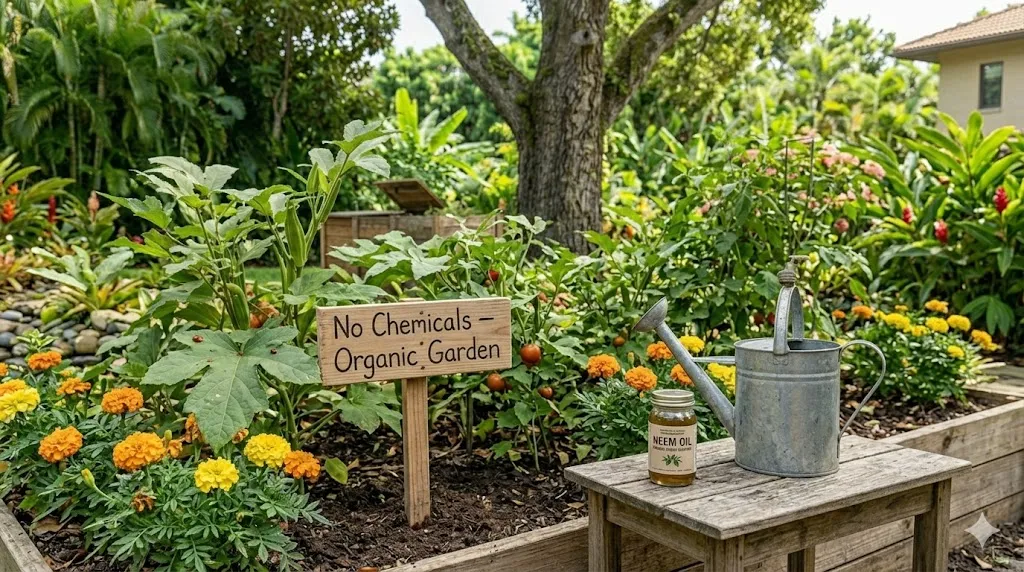
Action: Use organic alternatives like neem oil and companion planting to manage pests.
Internal Link: Discover more about organic soil health in our latest guide.
Organic alternatives to common chemicals:
| Chemical | Organic Alternative |
|---|---|
| Synthetic fertilizer | Compost, worm castings, aged manure, comfrey tea |
| Chemical pesticide | Neem oil, insecticidal soap, diatomaceous earth |
| Herbicide | Hand-weeding, mulch, corn gluten meal, boiling water |
| Fungicide | Baking soda spray, copper spray (OMRI listed), milk spray |
Pro tip: Healthy soil grows healthy plants that resist pests naturally. Focus on compost, crop rotation, and companion planting (marigolds with tomatoes, basil with peppers) to prevent problems before they start.
Pin-worthy tip: “Feed your soil, not your plants. Healthy soil grows pest-resistant plants – no chemicals needed.”
This is the ultimate goal in how to create a zero-waste garden – a closed-loop, self-sustaining ecosystem.
You Might Like 5 Peat-Free Gardening
Quick Reference: 5 Zero-Waste Garden Steps
| Step | Action | Waste Eliminated |
|---|---|---|
| 1 | Start composting | Kitchen scraps, yard waste, paper |
| 2 | Collect rainwater | Tap water, plastic water bottles |
| 3 | Save seeds | Seed packets, plastic envelopes |
| 4 | Ditch plastic | Pots, trays, tags, landscape fabric |
| 5 | Grow organically | Chemical bottles, synthetic packaging |
Pin-worthy tip: “A zero-waste garden doesn’t happen overnight. Start with compost – then add one new habit each season.”
Let’s Talk About Your Zero-Waste Garden
Now I want to hear from you.
Which of these steps for how to create a zero-waste garden will you implement this weekend? Drop a comment below or tag @ouladeco on Pinterest with your progress!.
And if this guide helped you, save it, share it with a friend who wants to garden more sustainably, and come back to Oula Deco for more eco-friendly gardening inspiration. Your zero-waste garden is closer than you think.
How to create a zero-waste garden – 5 simple steps: compost, use rain barrels, save seeds, ditch plastic, and grow organically. Save this sustainable guide! 🌱♻️ #ZeroWasteGarden #SustainableGardening #OulaDeco

