
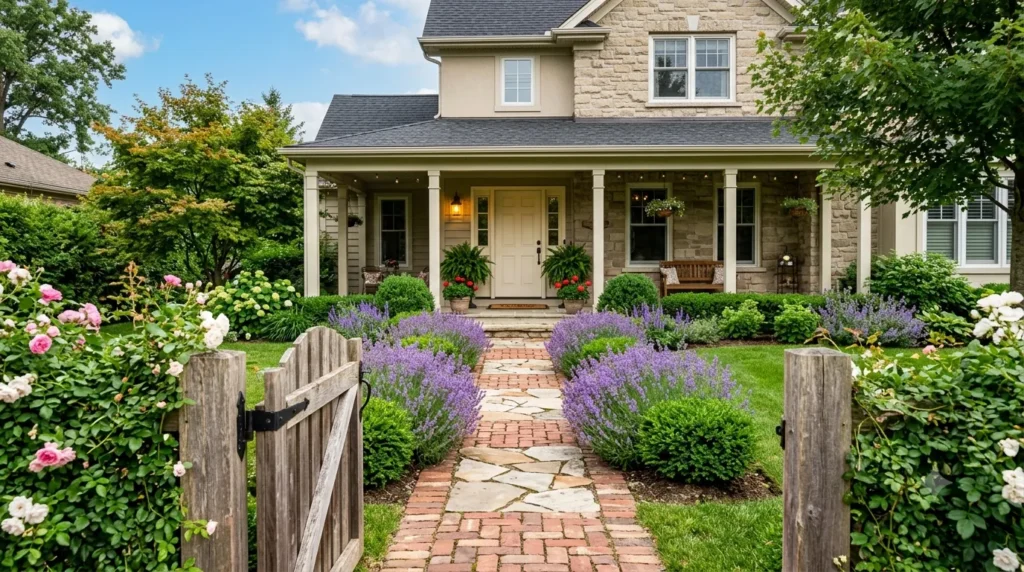
If you are looking to upgrade your curb appeal, exploring paved pathway ideas is the perfect starting point. The journey from your gate to your door is the first impression your home makes. With the right paved pathway ideas, you can turn a simple walk into a beautiful, inviting experience.
The key is striking the right balance between aesthetics, durability, and practicality. Before choosing materials, consider that front walkways are often more formal than backyard paths because they serve as your home’s “welcome mat”. Here are some of the most popular and effective paved pathway ideas to consider.
Brick Pathways: Timeless Elegance
Brick is a classic choice for paved pathway ideas. Its warm tones offer timeless charm, and patterns like herringbone provide both durability and a high-end look.s.
Why brick works: Brick offers timeless charm and a solid surface that resists wear and tear. It can be laid in various patterns, like herringbone or basketweave, providing both traction and visual interest. The modular size of bricks also makes curves and gentle bends easy to create, allowing you to guide guests toward the door in a way that feels natural.
Available patterns: Herringbone (great for high-traffic areas), basketweave (classic and low-maintenance), and running bond (simple and cost-effective).
Pro tip: Look for reclaimed brick from demolition sites for a fraction of the price. The worn edges add instant charm and save money at the same time.
Get design inspiration at Better Homes & Gardens
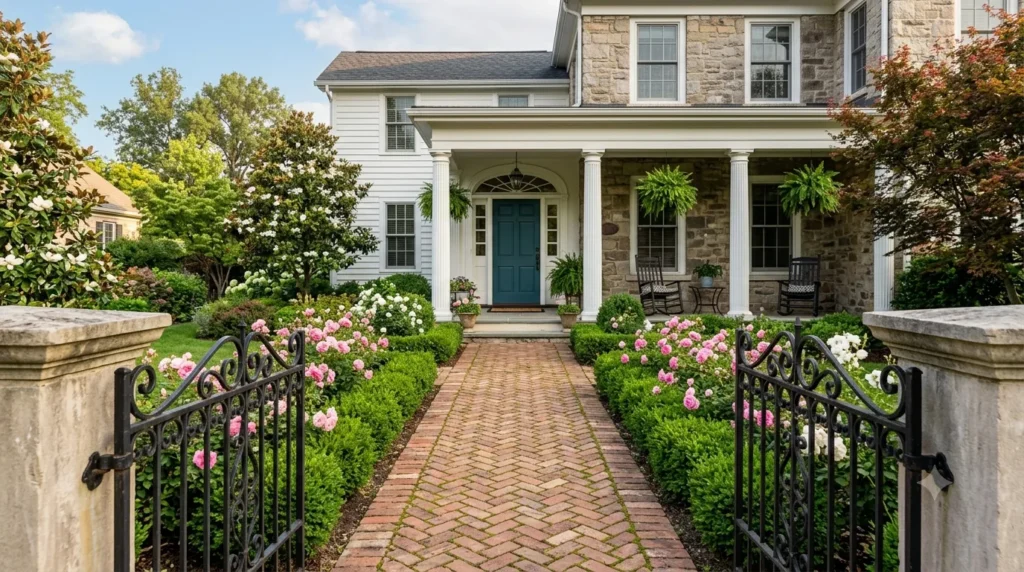
Natural Stone Pathways: Beauty That Lasts
For an organic feel, natural stone is one of the most reliable paved pathway ideas. Slate, granite, or flagstone blend beautifully with gardens and last for decades.
Why stone works: Natural stone is extremely durable, able to handle any weather while maintaining its good looks for decades. It’s available in a wide range of colours, shapes, and sizes to fit any need. The irregular edges of flagstone soften hard landscaping lines and complement natural planting schemes.
Placement considerations: If your path from the gate to the front door is uneven, consider using larger pads of paving at different heights to fix the level. One metre (about 3 feet) is generally the minimum width for a comfortable front walkway that allows two people to walk side by side.
Pro tip: If possible, choose stone from a quarry in your area-it will save money on transportation costs, and the stone will feel at home in your landscape.
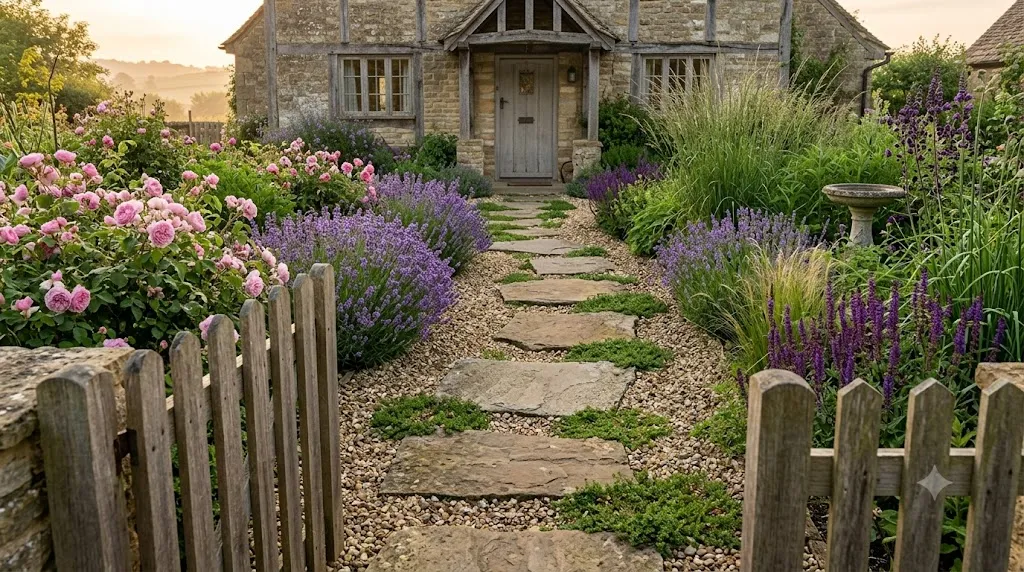
Concrete and Porcelain: Modern and Low-Maintenance
If you prefer a sleek aesthetic, modern porcelain slabs are excellent paved pathway ideas. They are low-maintenance and provide a level, clean surface for easy walking.
Why porcelain works: Porcelain paving offers a clean, contemporary look with long-lasting durability. It’s low-maintenance-simply requiring occasional cleaning to remove dirt or algae. Large-format slabs create wide, level surfaces that are smooth and easy to walk on, suitable for wheelchairs and pushchairs.
Modern concrete options: Precast concrete pavers come in any number of sizes, shapes, and colours. They are less prone to cracking than poured-in-place concrete and are easy to repair or replace if problems develop. For a more artistic look, consider stamped concrete that mimics the look of natural stone or tile.
Pro tip: If you’re considering lighting, installing low-voltage path lights alongside a concrete walkway improves nighttime safety and adds aesthetic appeal.
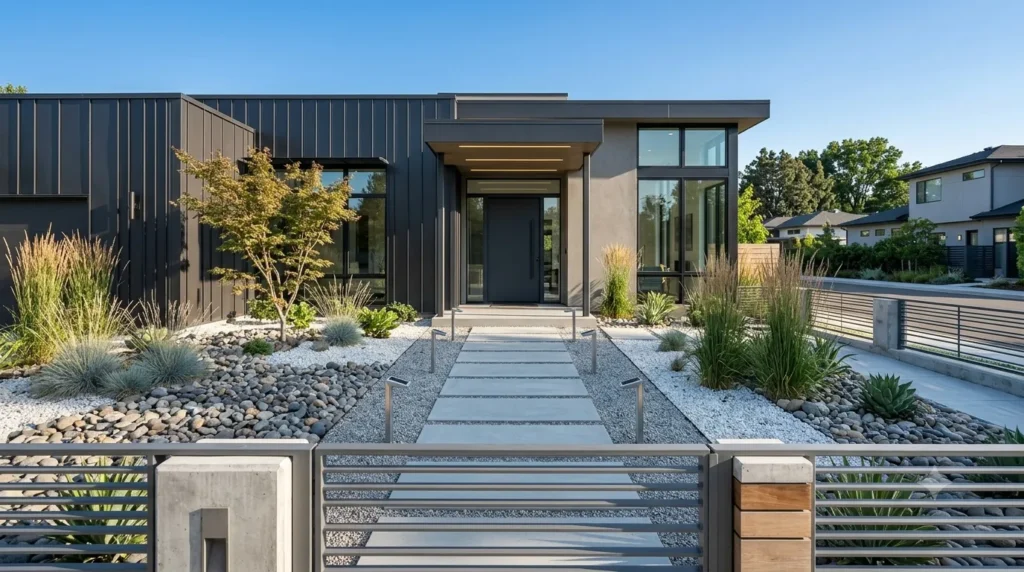
Gravel Paths: Budget-Friendly Charm
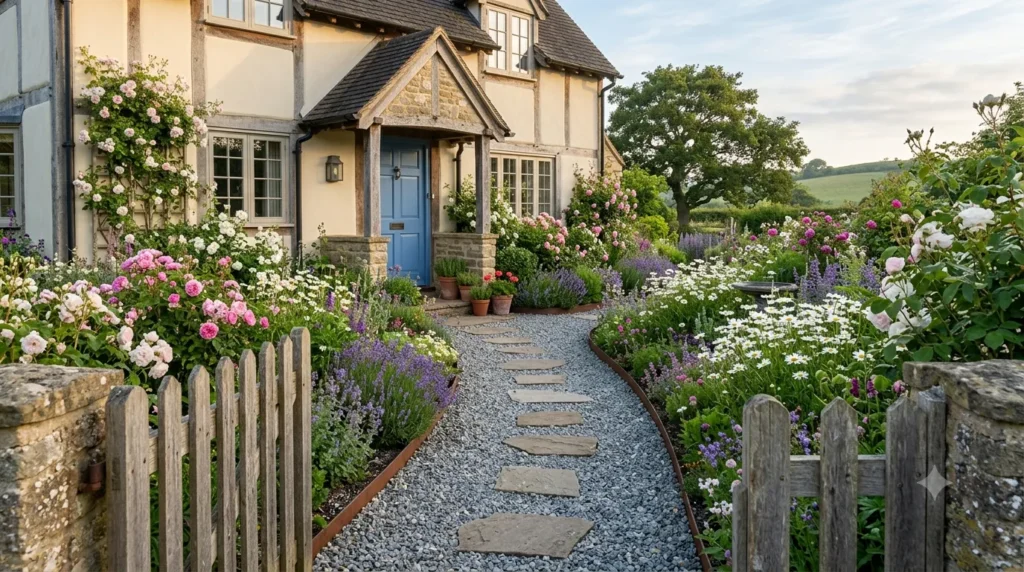
Gravel is one of the most versatile paved pathway ideas for cottage gardens. It is cost-effective, drains well, and creates a charming, informal approach to your front door.
Why gravel works: Gravel provides flexibility for curved designs and excellent water drainage. It’s easy to install, budget-friendly, and can be paired with stepping stones or edging to create a more polished look.
Containment is key: use metal, brick, or timber edging to contain the gravel-neat edges make all the difference. If you’re using gravel in a front entrance, choose small stones over large ones for more comfortable walking.
Pro tip: For a more advanced style, place larger stones over gravel in a Japanese-inspired design. It’s tricky to set up-you want to make sure everything is steady—but the results are worth the effort.
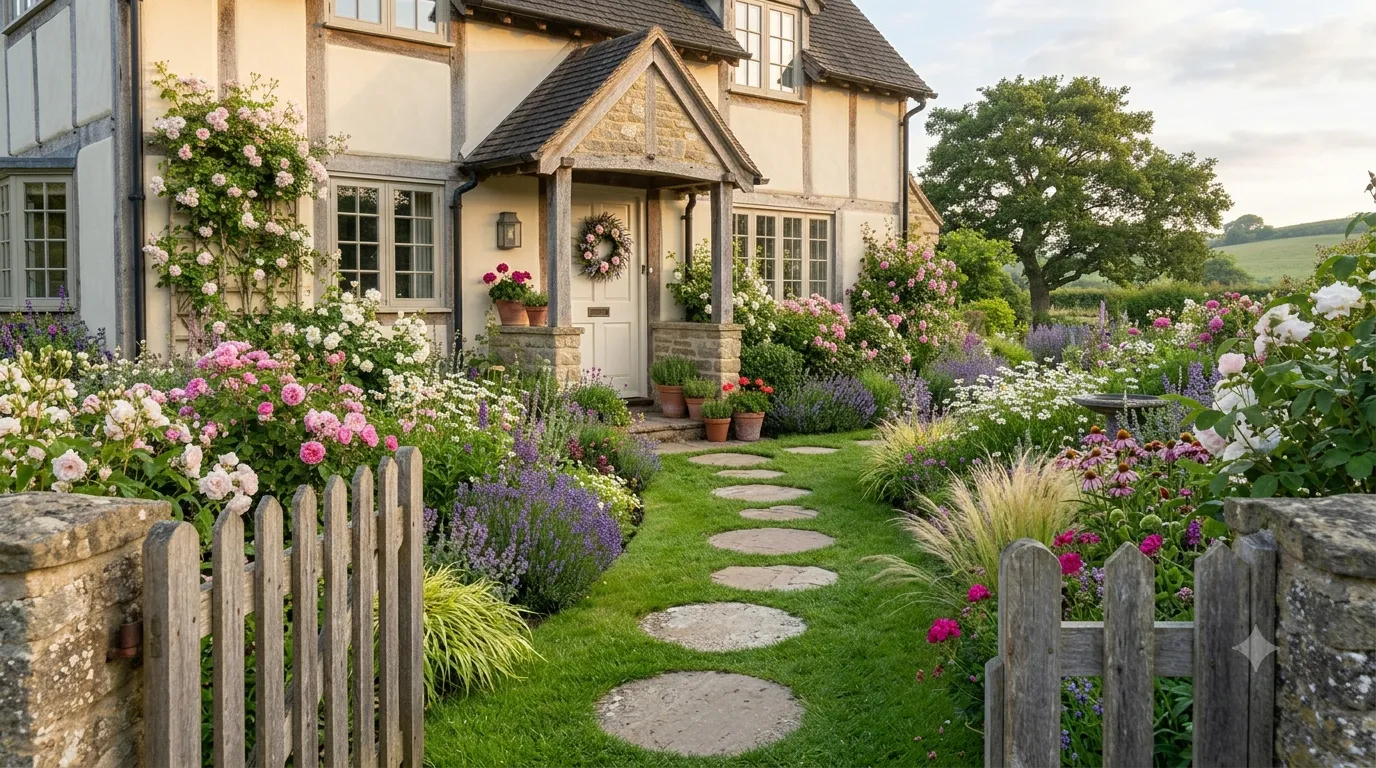
Stepping Stones: Playful and Organic
Stepping stones are playful paved pathway ideas for an informal entrance. By using these as part of your design, you create a relaxed approach that encourages guests to slow down.
Why stepping stones work: The negative space between stones creates visual breathing room, and the path feels less rigid than a continuous surface. This layout also improves drainage and prevents water from pooling.
Important note: The closer together you put stepping stones, the faster people will walk through your garden. If you place them further apart, visitors will take more time to walk through the area. Plan stone spacing to match a comfortable walking stride.
Pro tip: Use landscape fabric beneath gravel to prevent weeds, and set stepping stones evenly to ensure they’re stable and don’t wobble.
Design Considerations Before You Start
Location matters: The walkway should link the driveway and the front door. Follow the path people naturally would take—have it meet the driveway close to where a person gets out of the car. Moving a gate diagonally opposite to the front door can create a more pleasurable meander through the space.
Clear transitions: Having a clear transition from the footpath to an entry path is essential. This is usually achieved through the transition of materials and by using structural elements like letterboxes, gates, and hedges.
Match your home’s style: Straight walkways suit classic, symmetrical homes, while curved or staggered paths work well with asymmetrical houses. Draw inspiration from your house-its style, era, and the colours and materials already present.
Safety first: Ensure the walkway is well lit, and consider sensor lights if stronger lighting is needed to navigate a tricky path. In regions prone to rain or snow, choose materials with good slip resistance and consider ease of snow clearing.
Let’s Talk About Your Pathway
Are you planning a new pathway from your gate to your front door? What material are you leaning toward-brick, natural stone, concrete, or gravel? Share your thoughts or questions in the comments below, or tag @ouladeco on Pinterest with your favourite pathway inspiration!
And if this guide helped you, save it for later and share it with a friend who’s planning a landscaping project!
You Might Like Essential Driveway Materials Ranked

