
Want to know how to make a tiny garden feel bigger? Discover 5 professional design tricks, from using mirrors to vertical planting, for a spacious outdoor retreat.
You have a small garden – a postage‑stamp patio, a narrow side yard, or a tiny urban courtyard. You love the idea of an outdoor retreat, but every time you step outside, it feels cramped and closed in.
What if you could make that same space feel twice as big – without knocking down walls or spending a fortune?
Here’s the truth: how to make a tiny garden feel bigger isn’t about adding square footage. It’s about using optical illusions, smart furniture choices, and vertical thinking to trick the eye.
I’ve gathered 5 powerful design tricks that professionals use to make small gardens feel spacious, open, and inviting. Best of all, they’re easy to implement over a weekend.
By the end of this guide, you’ll know exactly how to transform your tiny outdoor space into a garden that feels much larger than it really is.
Let’s dive into how to make a tiny garden feel bigger – one clever trick at a time.
1. Use Mirrors to Create the Illusion of Depth
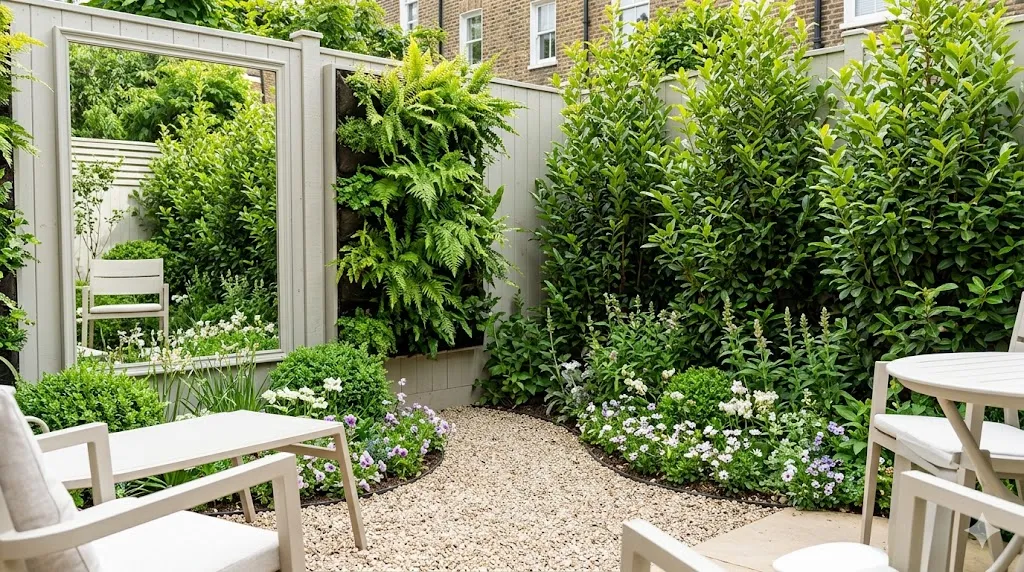
The oldest trick in the design book works just as well in gardens as it does indoors. A well-placed mirror reflects light and greenery, instantly doubling the perceived size of your space.
Why it works:
Your brain sees the reflection and thinks there’s another garden beyond the mirror. It’s a simple, affordable illusion.
Where to place mirrors:
- On a fence or wall at the far end of a narrow garden.
- Behind a seating area to reflect plants and create depth.
- On a shaded wall to bounce light into dark corners.
What to use:
- Outdoor‑rated mirror (framed or frameless, with sealed edges to prevent moisture damage)
- A vintage window frame with mirrored glass (charming and functional)
- Polished stainless steel (modern, unbreakable)
Pro tip: Angle the mirror slightly downward to reflect the garden, not the sky. Clean it regularly – a dirty mirror ruins the illusion. Secure it firmly to the wall so it won’t fall.
Pin-worthy tip: “A mirror in a tiny garden is like a window into another world – the world where your garden is twice as big.”
This is the most powerful trick in how to make a tiny garden feel bigger.
2. Go Vertical – Use Walls and Fences for Planting
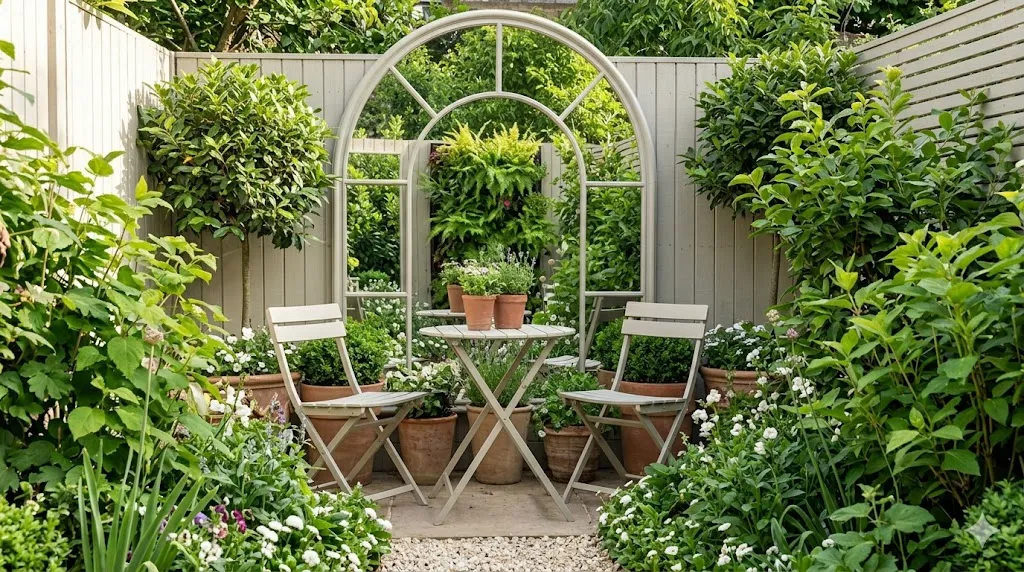
When floor space is limited, look up. Vertical gardens draw the eye upward, making the space feel taller and less cramped.
Why it works:
By using vertical surfaces for plants, you free up ground space for seating and pathways. The eye follows the plants up, expanding the perceived volume of the space.
Vertical planting ideas:
- Living wall: A frame with pockets for plants (ferns, succulents, trailing ivy).
- Trellis with climbers: Train clematis, jasmine, or climbing roses up a fence.
- Hanging baskets: Stack them at different heights for visual interest.
- Wall-mounted planters: Pots attached directly to a fence or wall.
Pro tip: Choose plants with small leaves – large leaves can make a space feel crowded. Use a mix of textures and shades of green for depth.
Pin-worthy tip: “When you can’t go out, go up. A vertical garden turns blank walls into lush landscapes.”
Among ways to make a tiny garden feel bigger, vertical gardening is the most productive use of space.
3. Create a Curved Path – The Eye Follows the Bend
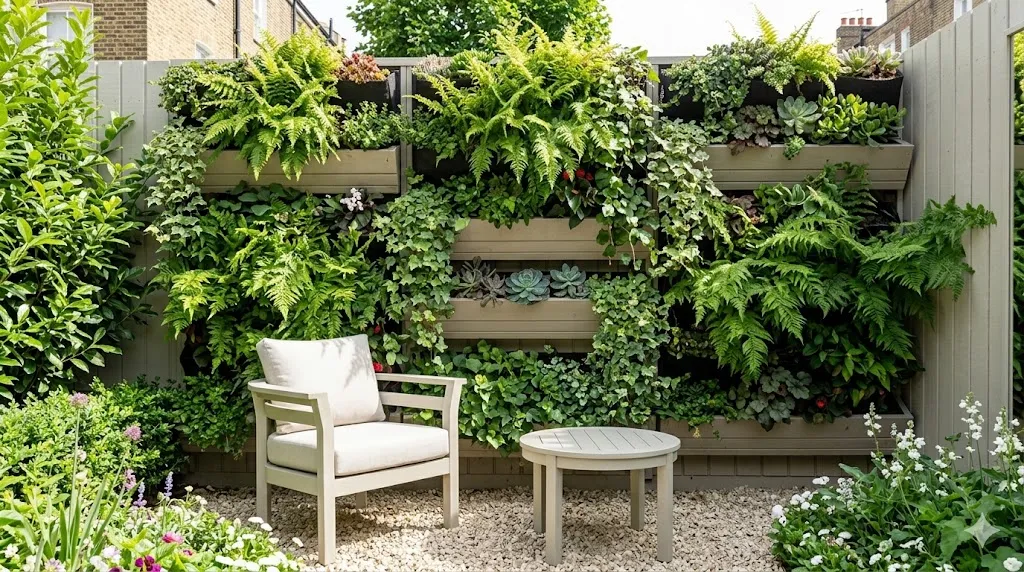
Straight lines emphasise the boundaries of a small garden. Curves trick the eye into thinking there’s more space around the corner.
Why it works:
A curved path breaks the rigid rectangular shape of a small yard. The bend hides the far end, creating mystery and encouraging exploration.
How to create a curved path:
- Use gravel, stepping stones, or pavers in a gentle S‑curve.
- Enter and start wide at the entrance and narrow toward the end.
- Plant along the edges to soften the curve.
Thyme and pro tip: Keep the curve gentle – a tight hair-pin turn looks forced. A 15–20 degree bend is ideal. Use plants that spill over the edges (creeping thyme and sweet woodruff) to blur the path’s edges.
Pin-worthy tip: “A curved path says ‘come explore’ – and suddenly your tiny garden feels like a journey.”
This is a favourite technique in how to make a tiny garden feel bigger.
4. Choose Light Colors and Small-Scale Furniture
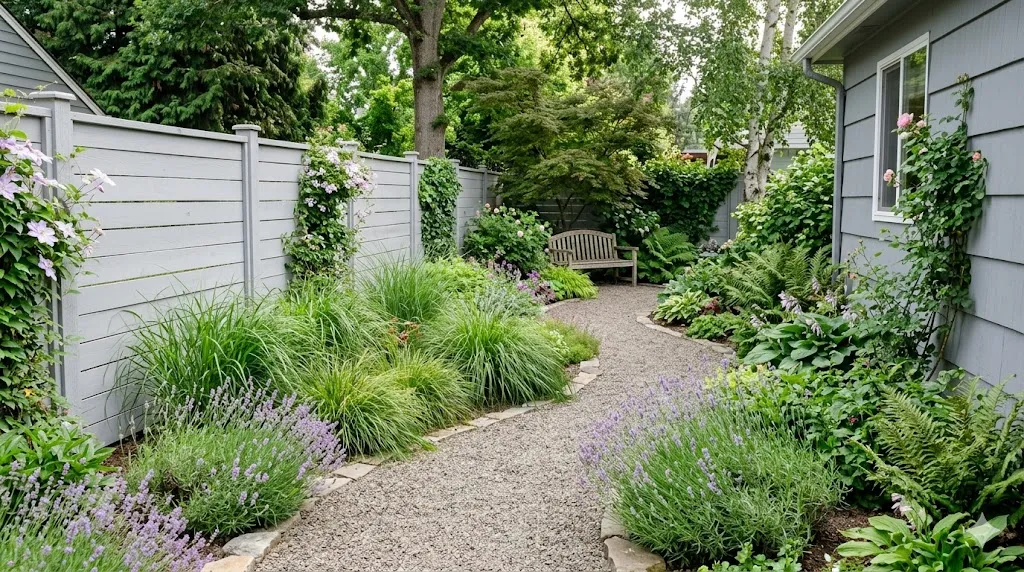
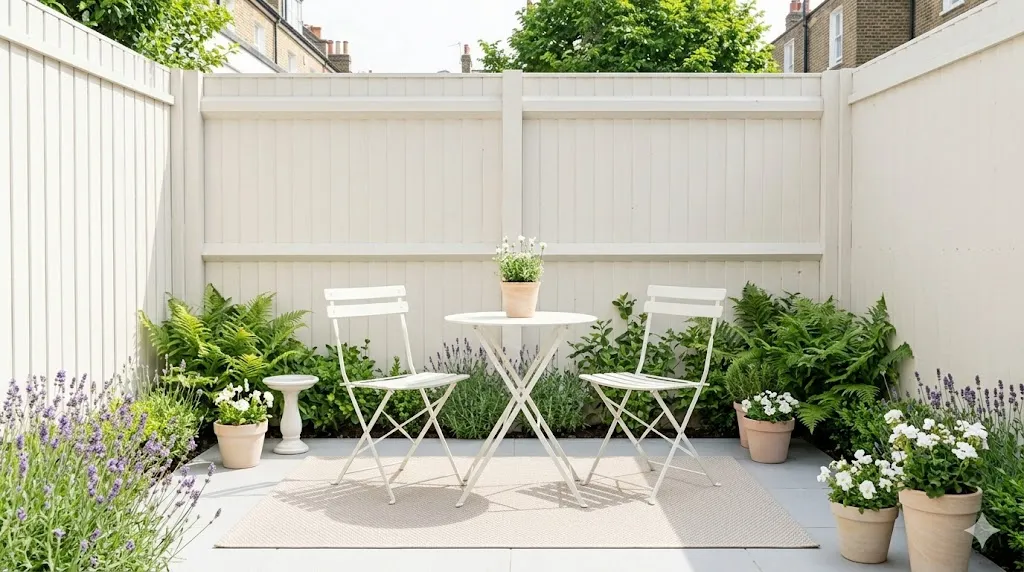
Colours, dark walls and oversized furniture make a small garden feel smaller. Light colours and appropriately sized pieces open it up.
colours. Why it works:
Light colours reflect sunlight, making boundaries recede. Small-scale furniture leaves more open space, reducing visual clutter.
Colour tips:
- grey. Paint fences and walls a light, warm white or soft grey.
- Choose pale paving stones or light gravel.
- Use white or pastel pots and planters.
Furniture tips:
- A small bistro set instead of a bulky dining table.
- A narrow bench instead of a deep sofa.
- Folding or stackable chairs (store them when not in use).
tables) Pro tip: Use clear furniture (acrylic chairs, glass tables) – it almost disappears, visually freeing up space. Avoid dark, heavy pieces.
‘cramped’.” Pin-worthy tip: “In a tiny garden, pale walls and petite furniture are your best friends. They whisper ‘space’ instead of shouting ‘cramped’.”
This is an essential principle in how to make a tiny garden feel bigger.
5. Create Layers and Focal Points – Trick the Eye
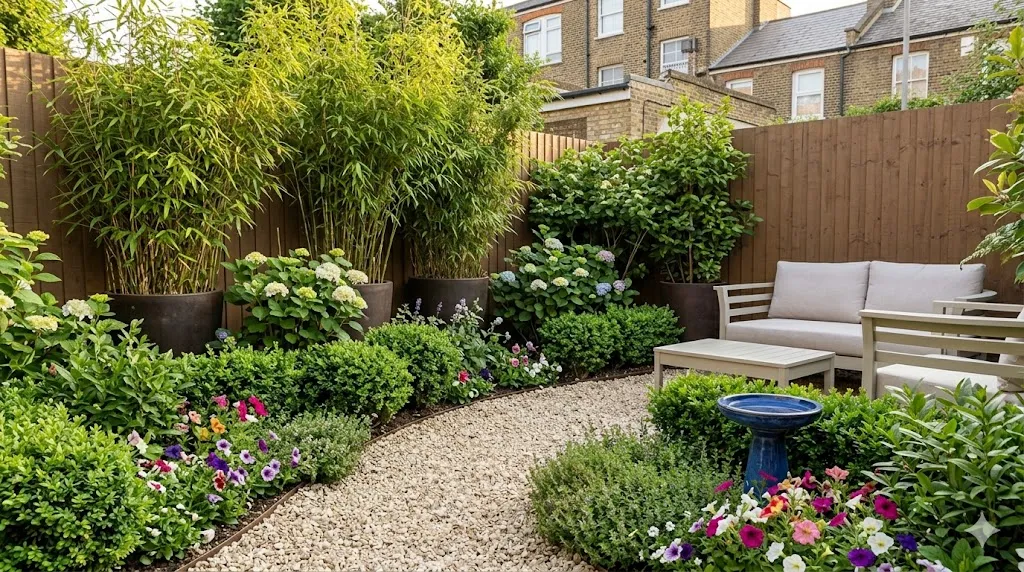
A flat, open garden reveals all its boundaries instantly. Layered planting and strategic focal points hide the edges and create depth.
Colourful: Why it works:
The eye rests on focal points (a bench, a fountain, a colourful pot) instead of boundary lines. Layers of plants (tall in back, medium in middle, short in front) create the illusion of distance.
How to create layers:
- Back (against the fence): Tall plants or a small tree (Japanese maple, dwarf apple, bamboo in pots).
- Middle: Medium shrubs (hydrangea, boxwood, lavender).
- Front: Low groundcovers or annuals (creeping thyme, petunias, lettuce).
Focal point ideas:
- A small bench or chair at the far end.
- A birdbath or small fountain.
- A large, colourful pot with a standout plant.
Pro tip: Place your focal point off‑centre – centred focal points emphasise symmetry and boundaries. Off-centre creates mystery.
Pin-worthy tip: “Layers are like chapters in a book – each one invites you to look deeper. Your garden becomes a story, not a postcard.”
This final trick completes how to make a tiny garden feel bigger.
Quick Reference: 5 Tiny Garden Tricks
| Trick | Why It Works | Best For |
|---|---|---|
| Mirrors | Reflects space and creates illusion of depth | Narrow gardens, dark corners |
| Vertical planting | Uses walls, frees floor space | Tiny patios, urban courtyards |
| Curved path | Breaks rigid boundaries, adds mystery | Long, narrow yards |
| Light colors & small furniture | Reflects light, reduces visual clutter | Any small space |
| Layers & focal points | Hides boundaries, creates depth | All gardens |
Pin-worthy tip: “A tiny garden isn’t a limitation – it’s an invitation to be clever. Use mirrors, curves, layers, and vertical space, and your small garden will feel wonderfully large.”
You Might Like How to Make a Tiny Garden Feel Bigger
Let’s Talk About Your Tiny Garden
Now I want to hear from you.
Which of these tricks for how to make a tiny garden feel bigger will you try first? Drop a comment below or tag @ouladeco on Pinterest
with a photo of your transformation. For more tips, browse our Small Space Inspiration archives. Your tiny garden is about to feel much larger!
And if this guide helped you, save it, share it with a friend who has a small outdoor space, and come back to Oula Deco for more small garden inspiration. Your tiny garden is about to feel much, much bigger.
How to make a tiny garden feel bigger – 5 clever tricks: mirrors, vertical planting, curved paths, light colours, and layers. Save this space-enlarging guide! 🌿✨ #TinyGarden #SmallSpaceGardening #OulaDeco

