
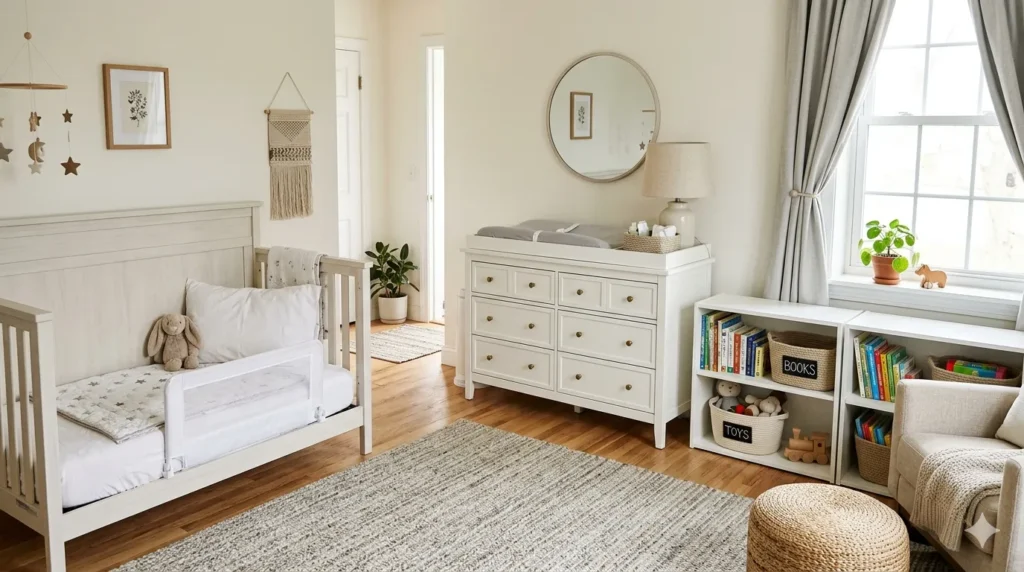
How to design a nursery that grows with your child. 5 budget‑savvy tips for a room that lasts from baby to big kid. Read more.
You’re expecting, and you want a perfect nursery. But that cute baby animal wallpaper? Your toddler will outgrow it in 18 months. The tiny crib? It’ll be too small before you know it. What if you could create a room that works from day one all the way to elementary school?
Here’s the truth: how to design a nursery that grows with your child isn’t about buying the cutest baby stuff. It’s about choosing versatile furniture, neutral foundations, and smart storage that adapts as your child grows.
big-kidI’ve helped friends design nurseries that transition seamlessly – from crib to big‑kid bed, from changing table to desk, from baby mobile to study lamp. No full room overhauls. No wasted money.
By the end of this guide, you’ll know exactly how to build a room that loves your newborn, your toddler, and your growing child – all without starting over.
Let’s dive into how to design a nursery that grows with your child – one timeless idea at a time.
1. Choose a Neutral, Calming Wall Color – Save the Theme for Accessories
hyper-specificThe biggest mistake parents make is painting the nursery a hyper‑specific theme – bright pink, navy blue with whales, or bold purple. Your child’s tastes will change. Walls are expensive and messy to repaint.
coloursWhat to do instead:
Paint the walls a soft, neutral colour that works for any age – warm white, pale grey, soft beige, or light sage. These colors are calming for a newborn and sophisticated enough for a pre‑teen.
Where to add theme:
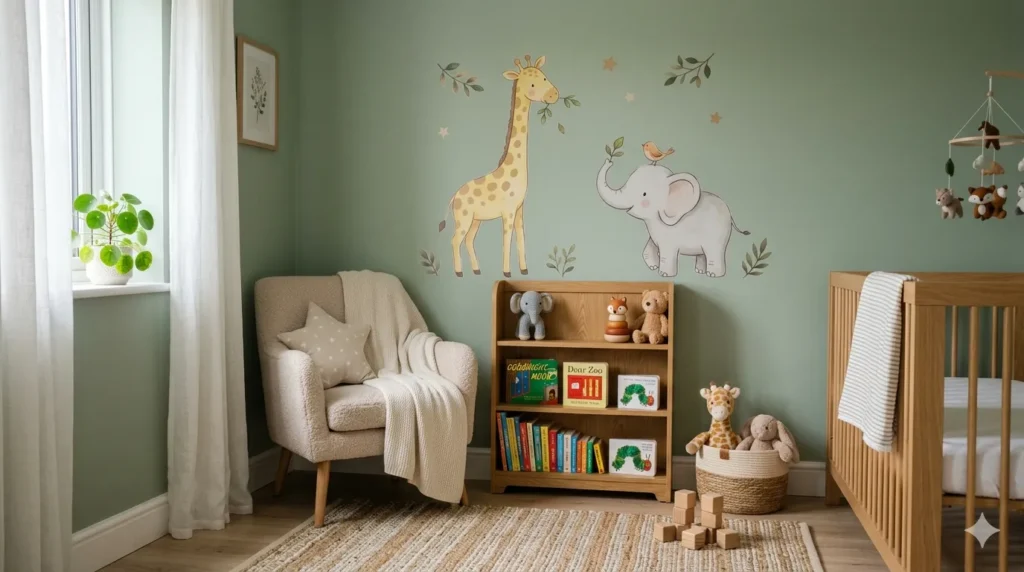
Use removable wall decals, art, bedding, and accessories for the “baby” look. A set of animal decals costs $20 and peels off in minutes. Swap them for space or dinosaur decals later.
Check out Project Nursery for more room inspiration
Pin-worthy tip: “Paint for the long haul. Decorate for the moment. Your walls will thank you – and so will your wallet.”
This is the first rule in how to design a nursery that grows with your child. Keep the foundation neutral and flexible.
2. Invest in Convertible Furniture – One Piece, Many Stages
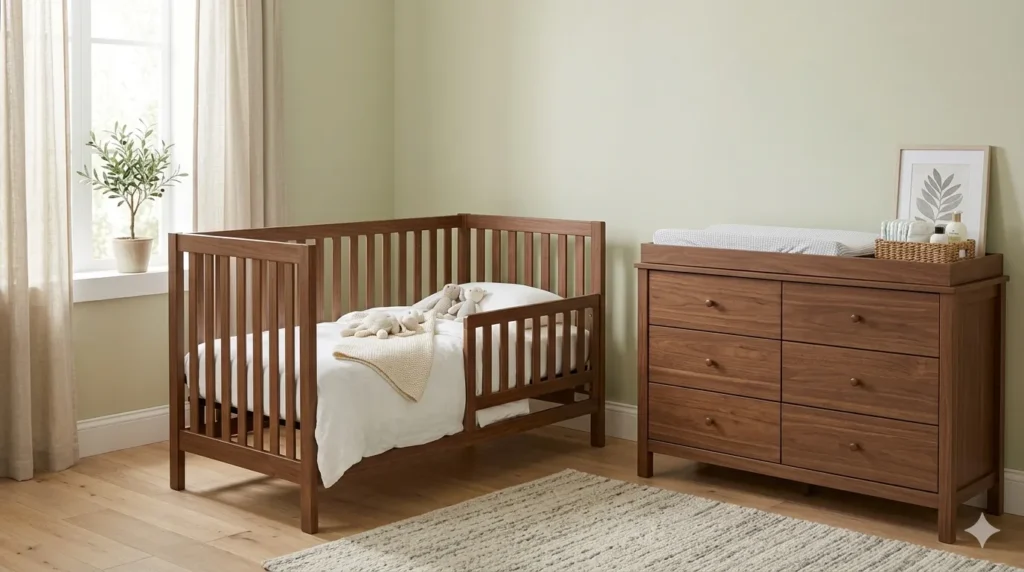
Buying a crib that only works for 18 months is a waste. Convertible furniture grows with your child – and saves you thousands.
Best convertible pieces:
- Crib to toddler bed to daybed to full‑size bed: Most 4‑in‑1 cribs convert to all four stages. You’ll never buy another bed frame.
- Changing table to dresser: Skip the dedicated changing table. Buy a standard dresser and add a removable changing tray on top. Remove the tray when your child is potty trained.
- for Glider to reading chair: Choose a classic, neutral rocker or glider that looks like regular living room furniture. It works in a nursery, a playroom, or even your own bedroom later.
Pro tip: Buy a crib with a low profile (no ornate cutouts or themed shapes). It will look like a modern bed frame in later stages.
Keep this pin-worthy tip in mind: “Convertible furniture is the gift that keeps on giving – from first lullabies to last bedtime stories.”
Investing in adaptable pieces is the smartest strategy in how to design a nursery that grows with your child.
3. Prioritize Storage That Adapts – Open Shelves, Bins, and Low Units
Baby storage is different from toddler storage, which is different from school‑age storage. Build a system that flexes.
Storage ideas that grow:
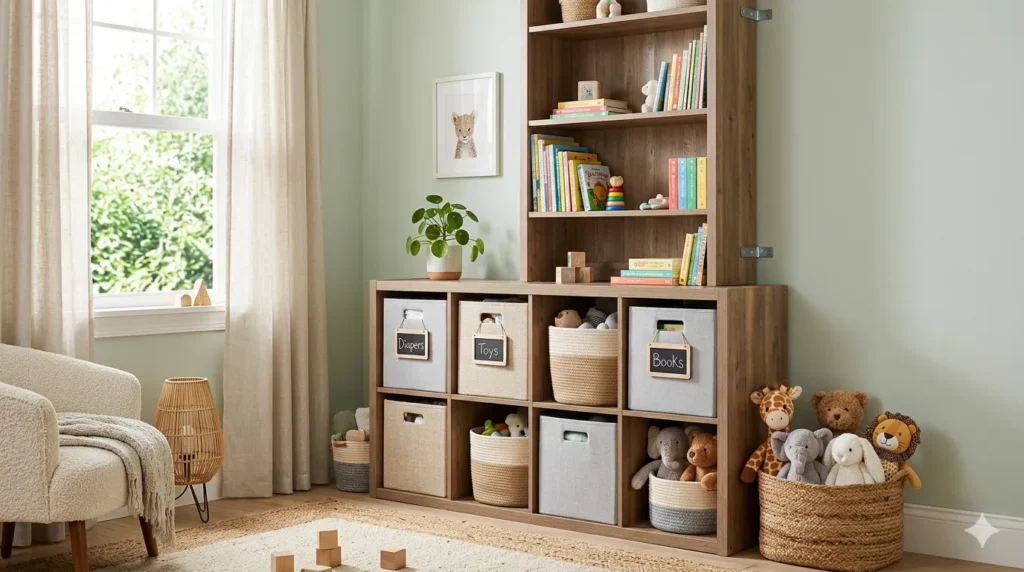
- nappies Low open shelves (IKEA Kallax or similar): Use bins for baby nappies and clothes. Later, use the same shelves for toy bins, then books, then craft supplies.
- Now and a tall bookcase: Mount it to the wall for safety. It holds board books now and chapter books later.
- A closet with adjustable rods: Install one low rod for baby clothes. When your child grows, move it higher. Add a second rod at adult height for future use.
Pro tip: Label bins with erasable tags or simple icons. You can change the label as the contents change – no need to buy new bins.
Colours Pin-worthy tip: “Storage should be a chameleon – changing colours and contents without changing its shape.”
Flexible storage is the backbone of how to design a nursery that grows with your child – it saves money and reduces clutter.
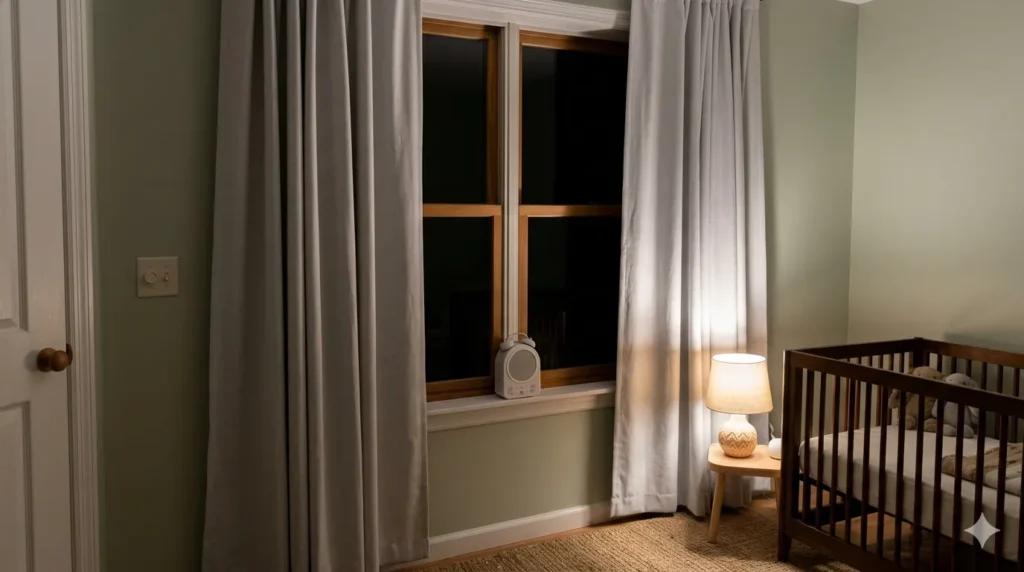
4. Create a Quiet, Dark, and Safe Sleep Environment That Works for All Ages
A good sleeper is a happy child – at every age. Invest in elements that never outgrow their usefulness.
Permanent sleep solutions:
- Grey blackout curtains: Block light for napping babies AND early‑rising toddlers AND light‑sensitive older kids. Choose a neutral colour (grey, cream, or navy) that works for any age.
- A white noise machine: Helps newborns sleep through household noise and older children block out street sounds. Pick a non‑toy version that looks like a regular alarm clock.
- A dimmer switch on the overhead light: Gentle for bedtime stories at any age. No harsh glare.
Safety first: Anchor all furniture to the wall. Cover outlets. Install window guards. These safety measures are permanent – they protect a crawling baby and a curious kindergartener equally.
Pin-worthy tip: “Blackout curtains and white noise aren’t just for babies. They’re for anyone who loves good sleep – including you.”
This timeless foundation is essential in how to design a nursery that grows with your child.
5. Leave Room for Growth – Don’t Overcrowd the Nursery
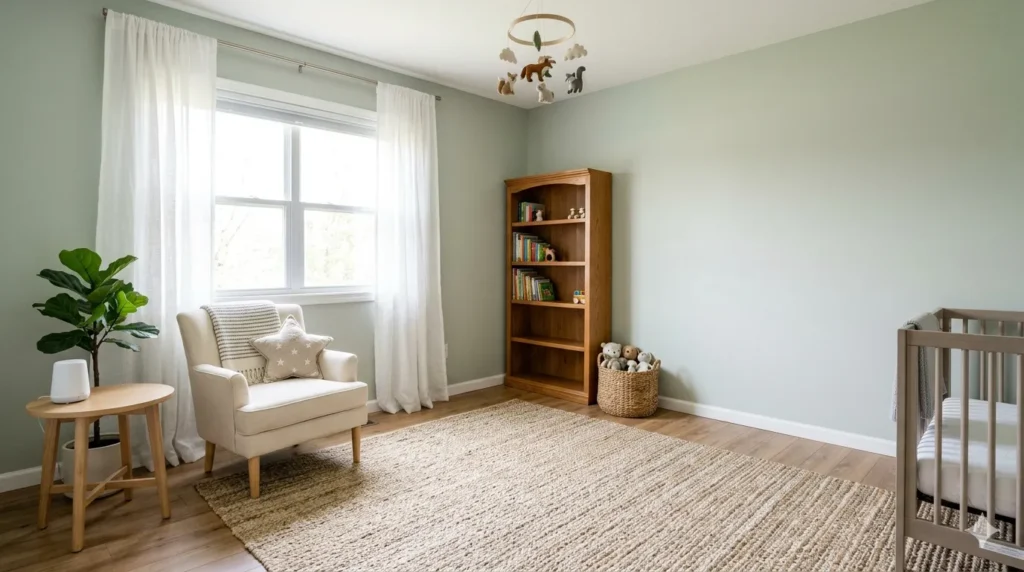
A tiny nursery packed with baby gear will feel cramped by age two. Leave empty space – literal and visual – for your child to grow into.
What to leave out (or buy later):
- Skip the oversized glider that dominates the room. Choose a smaller armchair.
- Don’t buy a “baby” bookshelf shaped like a train. Buy a normal, classic bookshelf.
- Avoid filling every wall with baby‑specific art. Leave one wall blank for future art or a growth chart.
Plan for transitions:
- Leave floor space for a toddler play mat, then a small desk, then a larger desk.
- Choose a rug that works for a nursery AND a big‑kid room (solid colour or simple pattern, not baby animals).
Pro tip: Buy a growth chart decal that sticks to the wall – it’s a sentimental piece that stays forever, no matter how the room changes.
Pin-worthy tip: “The best nurseries are only half‑finished. The other half is waiting for your child to fill it.”
This forward‑thinking approach completes how to design a nursery that grows with your child – a room that breathes and changes with them.
Your 5‑Step Grow‑With‑Them Nursery Cheat Sheet
| Step | Action |
|---|---|
| 1 | Neutral wall color – save themes for removable decals & accessories |
| 2 | Convertible furniture – crib to bed, changing top to dresser |
| 3 | Adaptable storage – low shelves with bins, adjustable closet rods |
| 4 | Permanent sleep solutions – blackout curtains, white noise, dimmer |
| 5 | Leave empty space – for future play, study, and growth |
Pin-worthy tip: “A nursery that grows with your child isn’t about predicting the future – it’s about leaving room for it.”
You Might Like How to Convert a Basement Into a Living Space
Let’s Talk About Your Grow‑With‑Them Nursery
Now I want to hear from you.
Which of these tips on how to design a nursery that grows with your child are you most excited to try? Drop a comment below or tag @ouladeco on Pinterest with your progress! Your nursery can love them from day one to graduation.
And if this guide helped you understand how to design a nursery that grows with your child, save it, share it with an expectant friend, and come back to Oula Deco for more home design inspiration.
Your child’s room can love them from day one to graduation – one smart choice at a time.
How to design a nursery that grows with your child – 5 smart tips: neutral walls, convertible furniture, adaptable storage, blackout curtains, and leaving space. Save this guide! 👶✨ #NurseryDesign #GrowingWithChild #OulaDeco

