
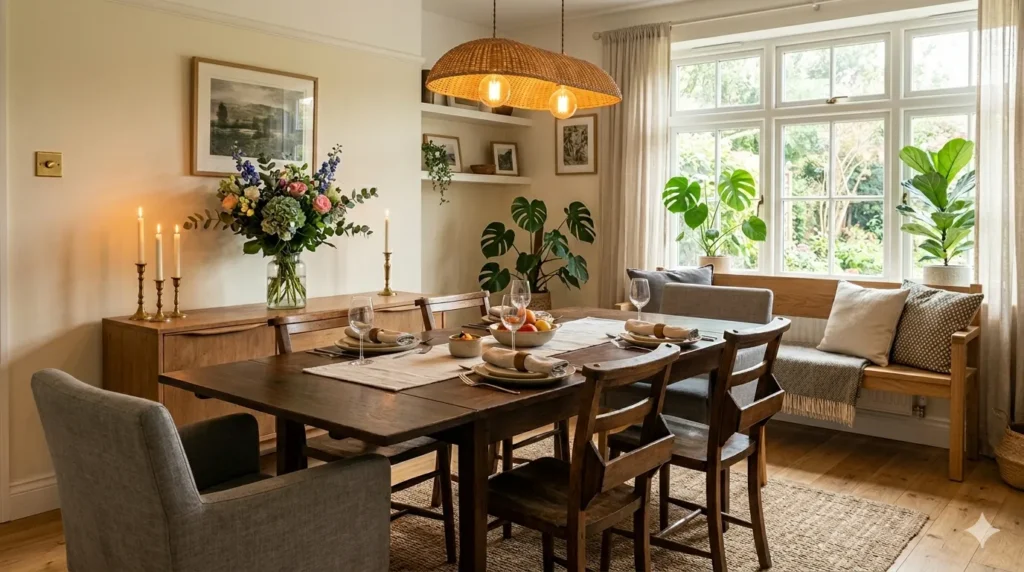
How to design a dining room that works for everyday and entertaining. 7 tips for style & function. Read more on Oula Deco.
You want a dining room that feels cosy for Tuesday night pasta but also wows guests at a Saturday dinner party. The problem? Most dining rooms lean either too formal or too casual. Finding the balance feels impossible.
Here’s the truth: how to design a dining room that works for everyday and entertaining is all about smart choices. You don’t need two separate rooms or a massive budget. Just the right table, lighting, seating, and a few flexible pieces.
I’ve helped friends transform stiff, unused dining rooms into spaces that handle everything – from homework and coffee to holiday feasts and cocktail parties.
By the end of this guide, you’ll know exactly how to choose furniture, layer lighting, and add storage so your dining room works hard for daily life – while still feeling special when company comes.
Let’s dive into how to design a dining room that works for everyday and entertaining – one smart idea at a time.
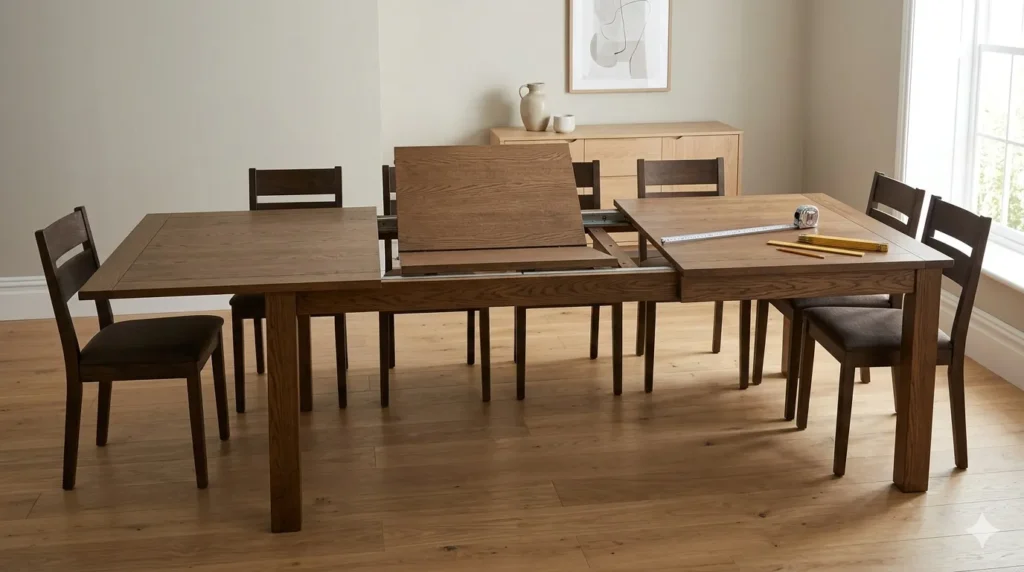
1. Choose an Extendable or Expandable Table
Your table is the heart of the room. For everyday use, you want a size that fits your family comfortably. For entertaining, you need room for extra plates and people.
Best options for a dual‑purpose dining room:
- An extendable table with drop leaves or a pull‑out center section (seats 4‑6 daily, up to 10‑12 extended)
- A pedestal table (no corner legs to block extra chairs)
- A round table with a removable leaf (feels intimate for two, expands for six) Get design inspiration from House Beautiful.
Pro tip: Avoid heavy, fixed tables that can’t grow with your guest list. Measure your room – allow 36‑48 inches of clearance around the table for chairs and walking space.
Pin-worthy tip: “An extendable table is like a magic trick – small for weeknights and big for celebrations.”
This is the first decision on how to design a dining room that works for everyday and entertaining. Get the table right, and everything else follows.
2. Mix Seat Types – Benches, Armless Chairs, and Stools
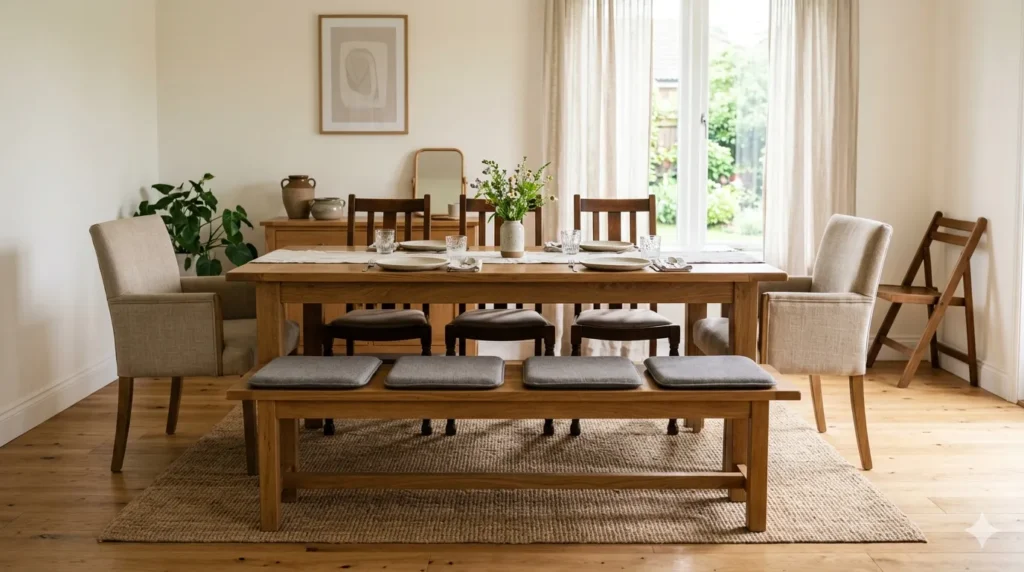
A matching set of eight bulky chairs looks formal but takes up space and feels rigid. For flexibility, mix seating types.
Everyday + entertaining seating ideas:
- Two armchairs at the ends (for everyday comfort)
- Armless side chairs (easy to tuck in and move around)
- A low bench along one side (slip more guests in quickly)
- Counter‑height stools (if you have a bar or island nearby)
Pro tip: Keep two “extra” folding chairs in a closet. They take no space but double your seating capacity in seconds. Choose upholstered or wooden ones that don’t scream “temporary”.
Pin-worthy tip: “A bench seats three where two chairs once sat. It’s the secret weapon of the entertaining‑ready dining room.”
This mix-and-match approach is key to designing a dining room that works for everyday and entertaining.
3. Layer Your Lighting with a Dimmer
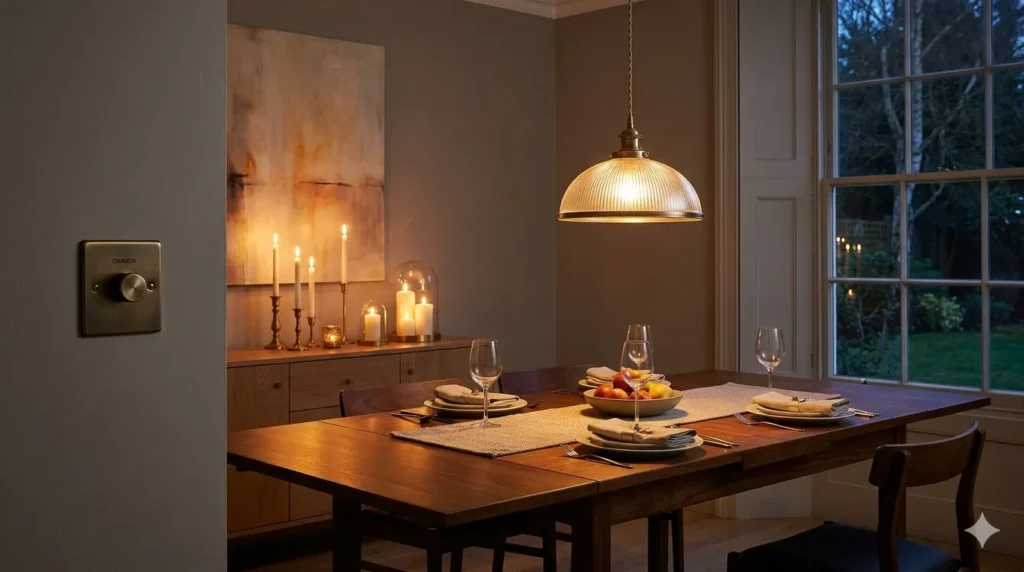
Harsh overhead light kills any dinner party mood. Soft, warm light makes mac and cheese feel fancy. The secret? Layered lighting on a dimmer.
Dining room lighting layers:
- Ambient: A statement chandelier or pendant (on a dimmer – 20% for dinner, 80% for homework)
- Task: A buffet lamp or wall sconces (for sideboard serving)
- Accent: Candlelight (real or battery-operated) – the ultimate entertainer’s cheat
Pro tip: Hang your chandelier 30‑34 inches above the table (for 8‑foot ceilings). Add a dimmer switch – it’s a $15 upgrade that changes everything.
Pin-worthy tip: “A dimmer is the difference between a dining room and a doctor’s waiting room. Flip it and feel the magic.”
Good lighting is essential in designing a dining room that works for everyday and entertaining – it sets the mood for every occasion.
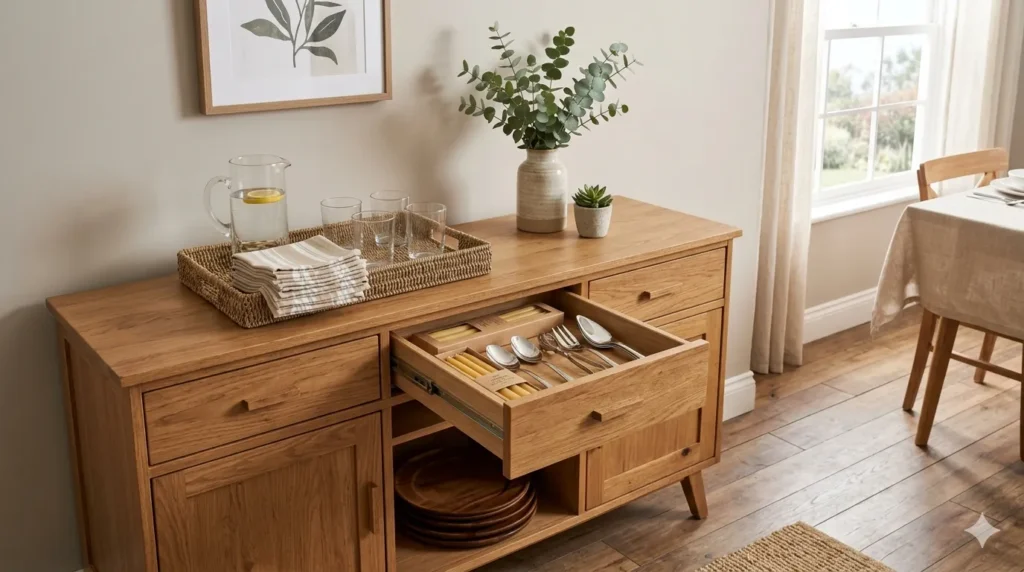
4. Add a Sideboard or Buffet for Storage & Serving
A dining room without storage is chaos. Where do you put extra plates, serving bowls, or table linens? A sideboard or buffet solves all of it.
Why it works:
- Stores entertaining essentials (extra plates, napkins, candles, serving utensils)
- Creates a serving station for buffet‑style dinners
- Adds surface space for drinks, appetizers, or a coffee station
Pro tip: Don’t fill it with junk. Dedicate one drawer to everyday items (placemats and napkins) and one to entertaining (candles and charger plates). Keep the top 50% empty for actual serving.
Pin-worthy tip: “A sideboard is the lungs of your dining room – it breathes function into the space.”
This practical piece is the backbone of how to design a dining room that works for everyday and entertaining.
5. Use Comfortable, Washable Textiles
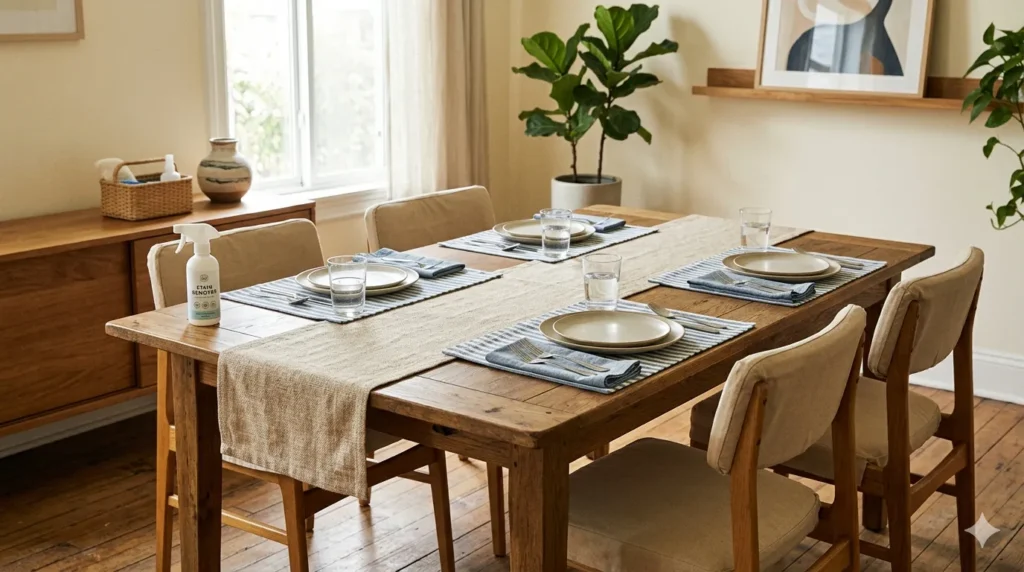
White linen napkins look gorgeous – but they stain. For everyday life, choose textiles that can handle spaghetti and red wine.
Smart textile choices:
- A washable tablecloth or runner (cotton or linen-blend, machine washable)
- Placemats instead of a full cloth (easier to swap and clean)
- Fabric or faux‑leather chairs (avoid raw linen if you have kids or clumsy friends)
- An indoor/outdoor rug (stain-resistant, easy to spot-clean)
Pro tip: Keep one set of “fancy” napkins and a tablecloth for parties, but use washable everyday versions. Store the good stuff in your sideboard.
Pin-worthy tip: “A dining room that works for everyday doesn’t fear red wine. It just washes it away.”
Practical textiles are a game‑changer in how to design a dining room that works for everyday and entertaining.
6. Zone the Space for Multiple Uses
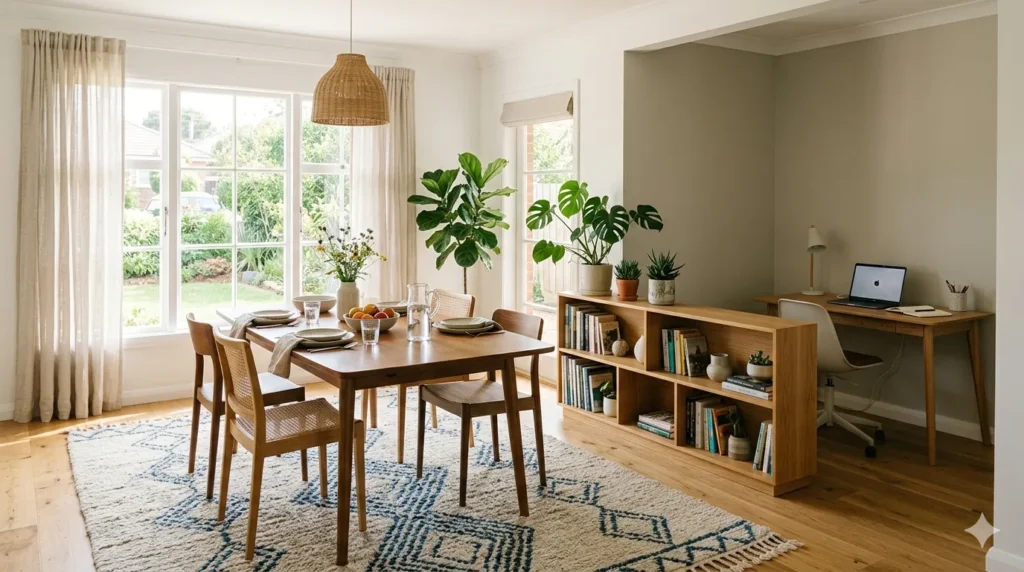
If your dining room pulls double duty – office, homework station, and play area – zone it visually without adding walls.
Zoning ideas:
- A large rug under the table defines the dining zone
- A bookshelf or low console separates “dining” from “office”
- A pendant light directly over the table anchors the eating area
- A small desk or floating shelf in a corner for laptop work
Pro tip: Use a drop‑leaf table against a wall for everyday laptop work. When guests come, pull it out and add chairs. Instant transformation.
Pin-worthy tip: “Zoning isn’t about walls – it’s about intention. ” A rug, a light, a shelf – your brain knows the difference.”
This flexibility is the secret to how to design a dining room that works for everyday and entertaining in smaller homes.
7. Decorate for Both Moods – Simple Swaps
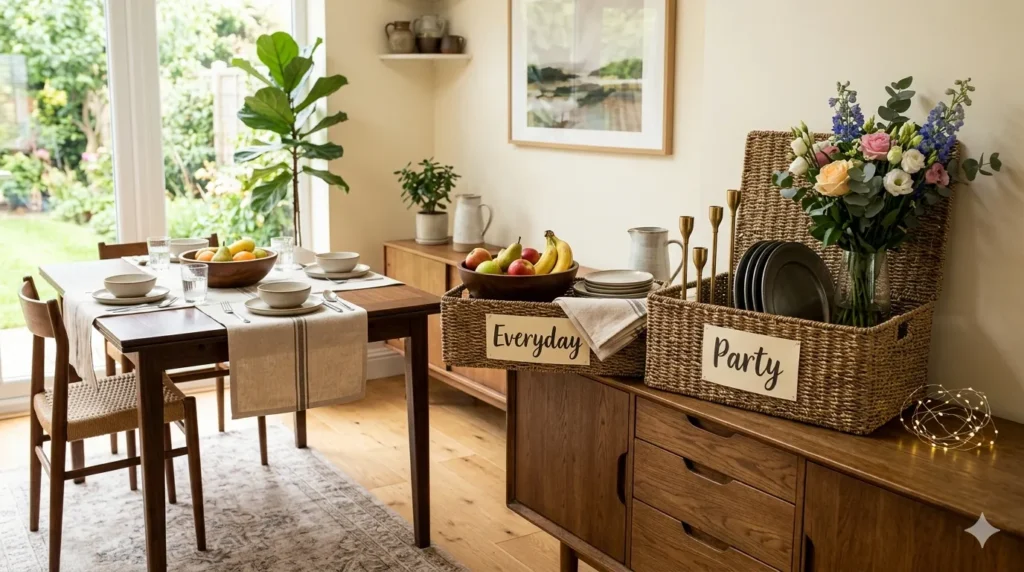
The same room can feel casual or formal with just a few quick changes. Build a foundation that adapts.
Everyday decor:
- A simple centerpiece (a wooden bowl of fruit, a stack of books)
- Everyday dishes on the table (stoneware or ceramic)
- A relaxed table runner (cotton or burlap)
Entertaining decor (stored nearby):
- A vase for fresh flowers (keep in sideboard)
- Charger plates and cloth napkins (stack in sideboard)
- Candlesticks or a taper set (pull out when guests arrive)
Pro tip: Keep a small basket of “party swaps” in your sideboard – candle holders, a tablecloth, and a flower vase. Set the table in 5 minutes.
Pin-worthy tip: “Your dining room should wear two outfits – jeans for Tuesday and a cocktail dress for Saturday. “Keep both in the closet.”
Now you’ve mastered how to design a dining room that works for everyday and entertaining – without renovating or stressing.
Your 7‑Step Dining Room Cheat Sheet
| Step | Action |
|---|---|
| 1 | Extendable table (grows with your guest list) |
| 2 | Mixed seating (chairs + bench + folding extras) |
| 3 | Layered lighting on a dimmer |
| 4 | Sideboard for storage and serving |
| 5 | Washable textiles (machine‑friendly) |
| 6 | Zone the space for multiple uses |
| 7 | Simple decor swaps (everyday vs. party) |
Pin-worthy tip: “The best dining room doesn’t choose between daily life and celebrations. It handles both – beautifully.”
You Might Like How to Style an Open-Plan Dining and Living Area
Let’s Talk About Your Dining Room
Now I want to hear from you.
Which of these tips on how to design a dining room that works for everyday and entertaining will you try first? Drop a comment below or tag @ouladeco on Pinterest with your dining room photo!
And if this guide helped you understand how to design a dining room that works for everyday and entertaining, save it, share it with a friend who loves hosting, and come back to Oula Deco for more home makeover inspiration.
Your perfect dining room is closer than you think – one smart choice at a time.

