
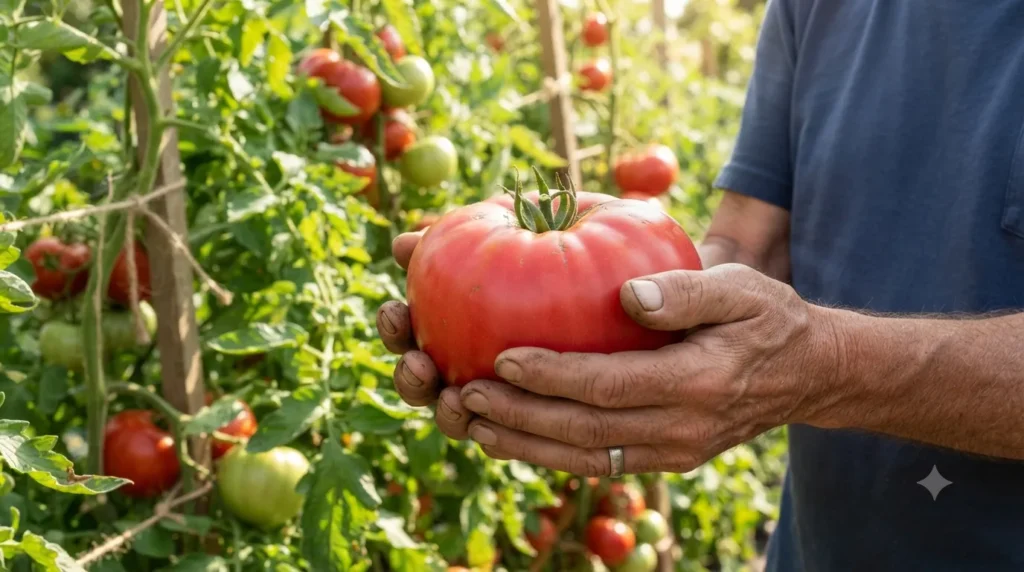
There is something deeply satisfying about growing giant tomatoes – especially when they are massive, juicy, and perfect for slicing. Whether you want to win a neighbourhood competition or simply want a sandwich-sized slice, growing giant tomatoes is a rewarding challenge that starts with genetics and ends with expert care. Follow these 7 proven tips to master the art of growing giant tomatoes this season.
The Best Tomato Varieties for Growing Giants
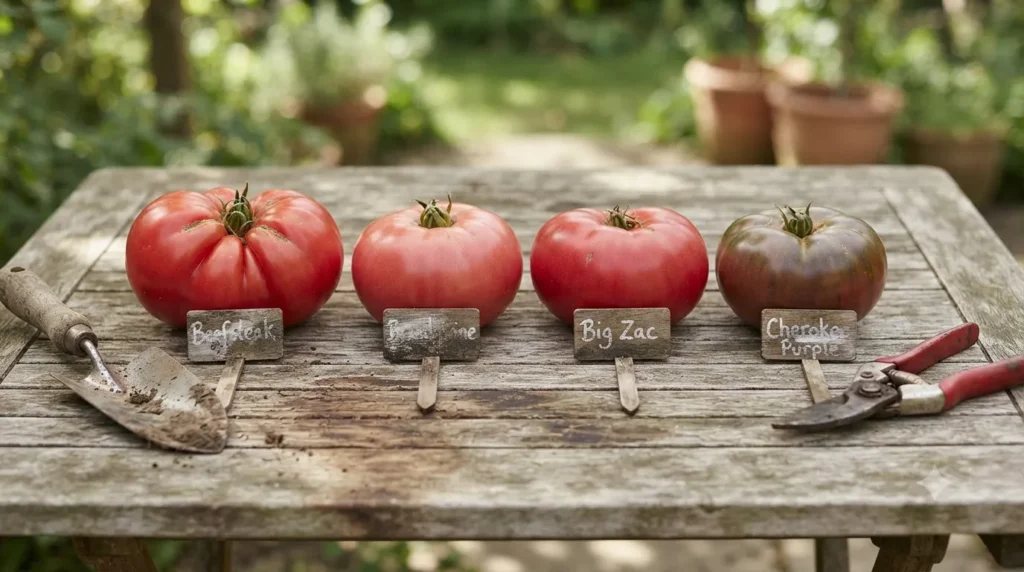
Success in growing giant tomatoes starts with genetics. Varieties like “Big Zac” or “Mortgage Lifter” are bred specifically for size. Always look for names including “beef” or “giant” to ensure you start with the right potential
Classic Beefsteak Varieties
Beefsteak is the gold standard for size. These wide, ribbed fruits range from 12 ounces to over 2 pounds, with solid flesh and very few seeds. Big Beef and Big Boy are popular disease-resistant hybrids that produce consistently large fruits .
Brandywine is a beloved heirloom with rich flavour and fruits often weighing over a pound. The Cherokee Purple offers a unique dusky-rose colour with a smoky, complex taste.
Record-Breaking Giants
Big Zac is the variety that holds world records—capable of producing tomatoes over 5 pounds under ideal cfruits.onditions.
Beefmaster consistently produces huge, meaty tomatoes that often weigh 2 pounds or more.
Mortgage Lifter is another famous heirloom known for its huge, flavourful fruit.
Pro tip: Look for varieties with “big,” “beef,” or “giant” in the name, as these are often bred for exceptional size .
Understanding Determinate vs. Indeterminate
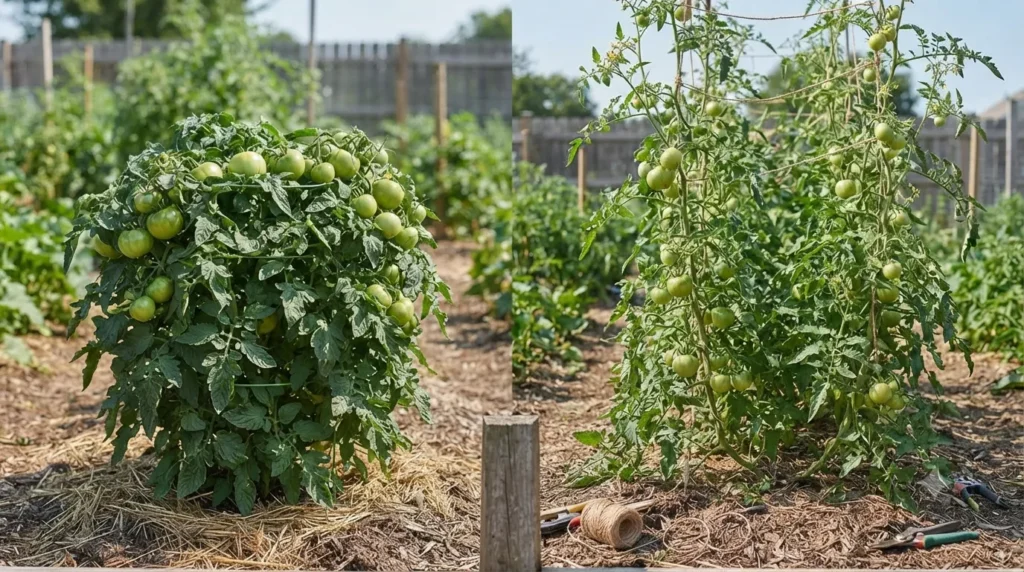
Before you plant, know the difference between these two growth habits:
| Type | Growth Habit | Best For |
|---|---|---|
| Indeterminate | Vines grow all season, setting fruit continuously | Large, sprawling plants that produce over a long season |
| Determinate | Grow to a set size, fruit ripens all at once | Compact gardens, shorter harvest window |
Most giant varieties are indeterminate, meaning they keep growing until frost kills them. This gives them more time to develop massive fruits.
Soil Preparation: The Foundation of Giants
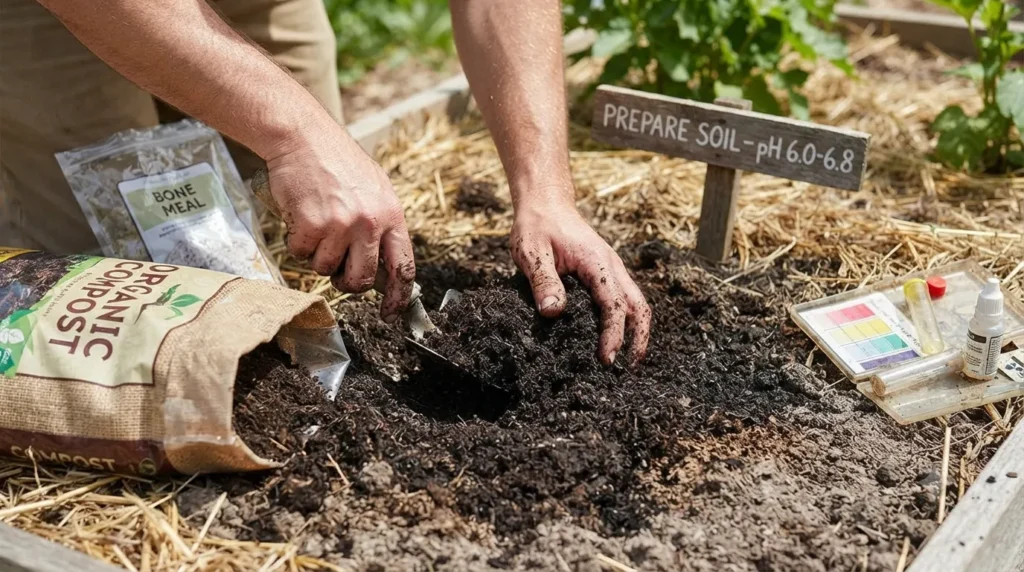
Massive tomatoes require massive nutrition. Your soil must be rich, well-draining, and slightly acidic (pH 6.0–6.8).
Steps for Perfect Soil
- Test your soil to understand pH and nutrient levels.
- Incorporate 3–4 inches of compost or well-rotted manure into the top 12 inches.
- Add phosphorus for strong roots and blooms—bone meal works well.
- Ensure adequate calcium to prevent blossom end rot—add gypsum or crushed eggshells.
Planting for Maximum Growth
Starting Indoors
Start seeds 6–8 weeks before your last spring frost. Use a quality seed-starting mix and keep soil temperatures between 70 and 80°F for optimal germination.
Transplanting Deep
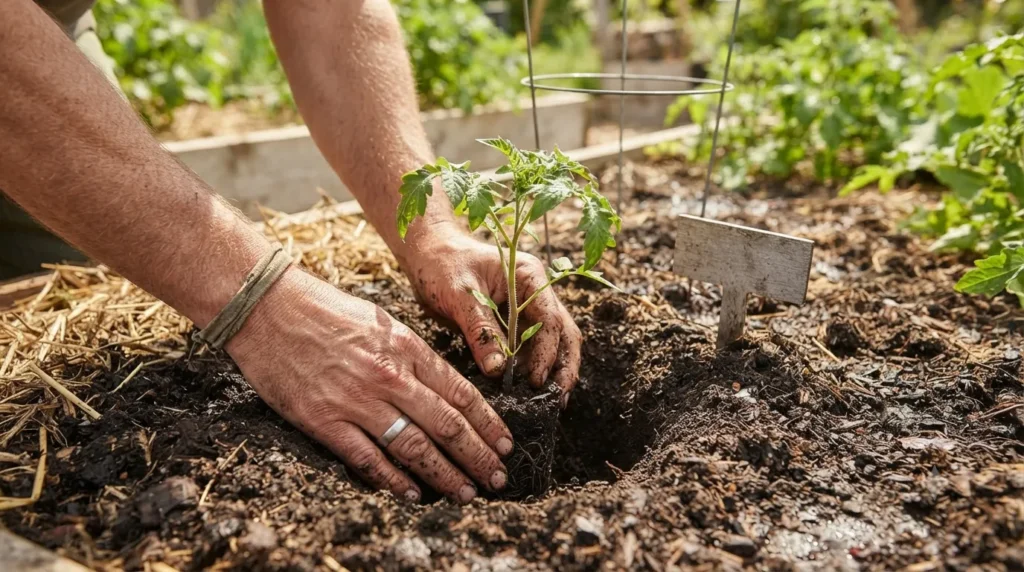
Bury seedlings deep—about two-thirds of the stem should be below the soil line. Tomatoes develop roots all along their buried stems, creating a stronger root system.
Spacing
Space plants at least 24–36 inches apart. These plants get huge and need room for airflow and root expansion.
Watering: Consistency Is Key
For giant tomatoes, consistency is everything. Fluctuations in water lead to cracking, blossom end rot, and poor development.
Watering Guidelines
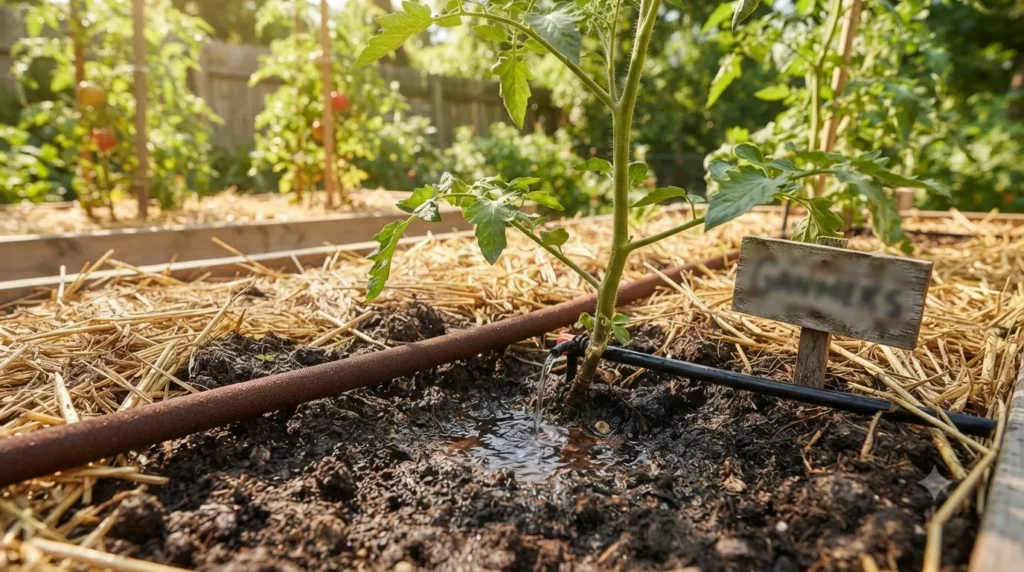
- Provide 1–2 inches of water weekly, more during hot spells.
- Water at the base—never overhead. Wet leaves invite disease.
- Use drip irrigation or soaker hoses for best results.
- Mulch heavily with straw or wood chips to retain moisture and keep roots cool.
Fertilizing: Feed for Size
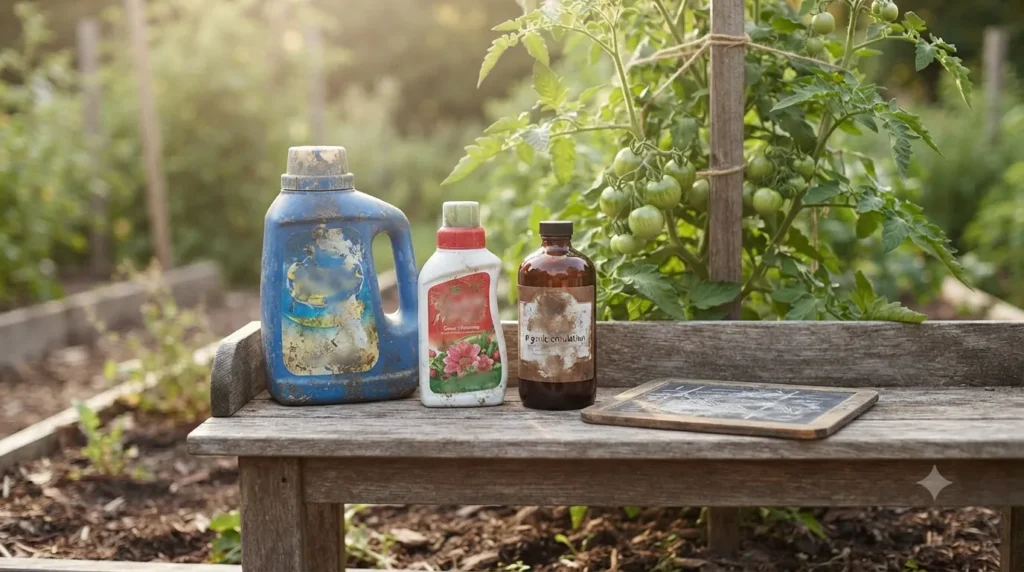
Giant tomatoes are heavy feeders. Follow a three-stage programme:
| Stage | Fertilizer Type | Purpose |
|---|---|---|
| Early Growth | Balanced (10-10-10) | Strong stems and leaves |
| Flowering & Fruit Set | Lower nitrogen, higher phosphorus (5-10-10) | Direct energy to fruit production |
| Fruit Enlargement | Higher potassium | Maximize fruit size |
Pro tip: Fish emulsion is excellent for tomatoes—it’s nutrient-rich and ideal for regular feeding.
Pruning for Giant Fruit
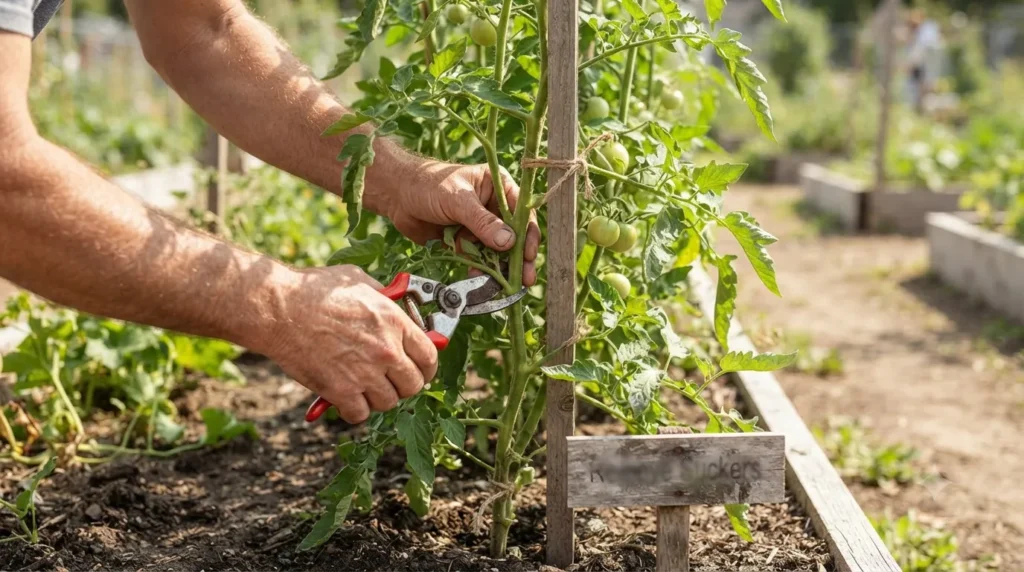
To grow a few giant tomatoes, you must convince the plant to focus its energy. That means aggressive pruning.
Pruning Method
- Remove all suckers (side shoots between the main stem and branches) to grow one main stem.
- Pinch off small flowers and any blossoms that appear late—direct energy to your chosen fruits.
- Remove leaves touching the ground to prevent disease.
- rest.Thin fruit clusters—when fruits are marble-sized, keep the one or two best-looking and snip off the rest .
Support: Don’t Let Your Giants Fall
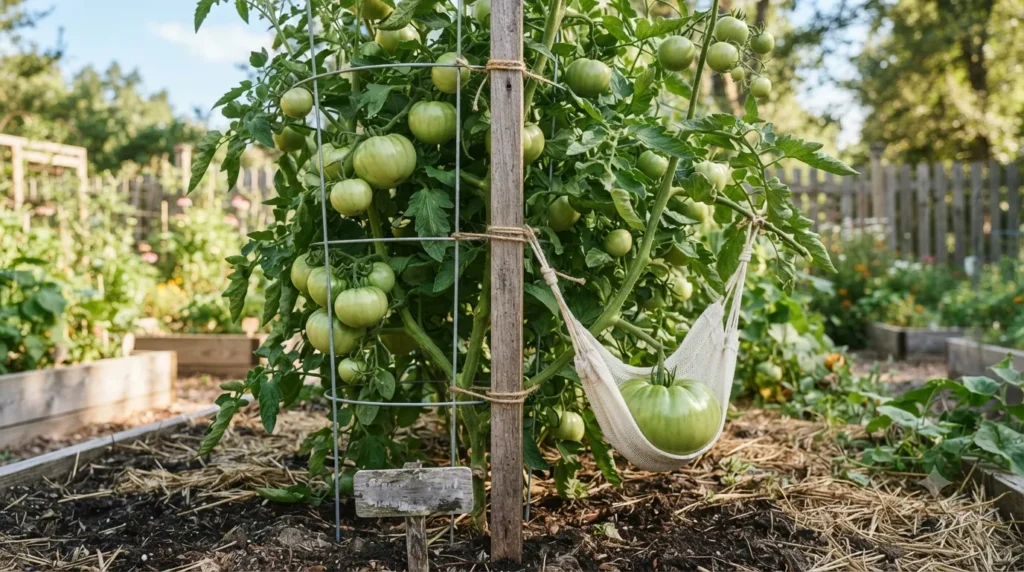
Massive tomatoes need serious support. A flimsy cage will topple under the weight.
Use sturdy stakes at least 6 feet tall, heavy-duty tomato cages, or trellises.
Competition tip: Some giant tomato growers use a “hammock” method—placing the fruit in a net or piece of fabric (even old underwear!) to support its weight and prevent stem breakage.
Pollination and Fruit Selection
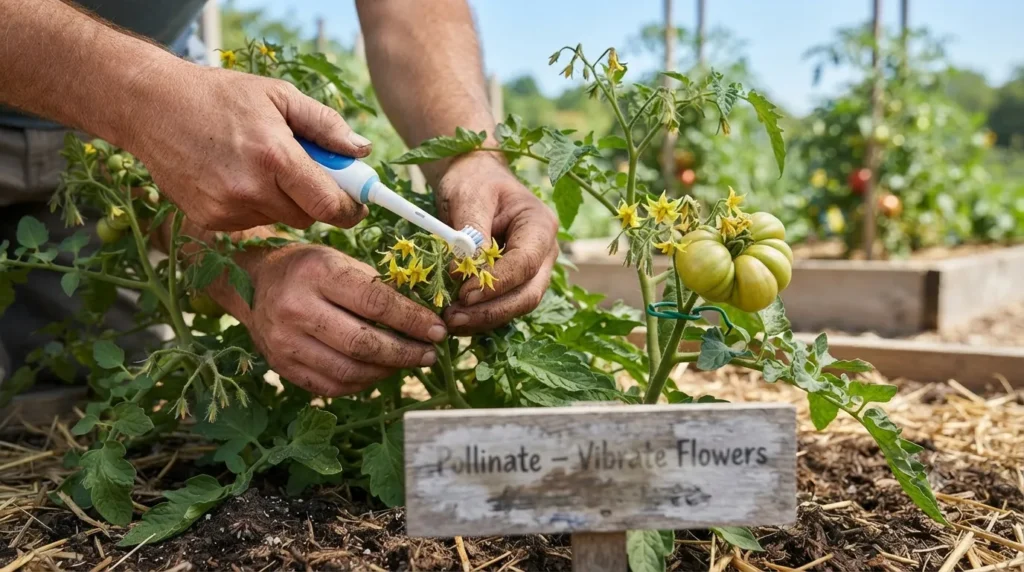
Tomatoes are self-pollinating, but you can help.
Vibrate the flower clusters gently when flowers are open and weather is dry—tap the stake or use an electric toothbrush on the back of the cluster to release pollen.
Look for “mega-blooms” — fused, misshapen flowers that often produce the largest fruits. These are the flowers to select for record-breaking size .
Pest and Disease Management
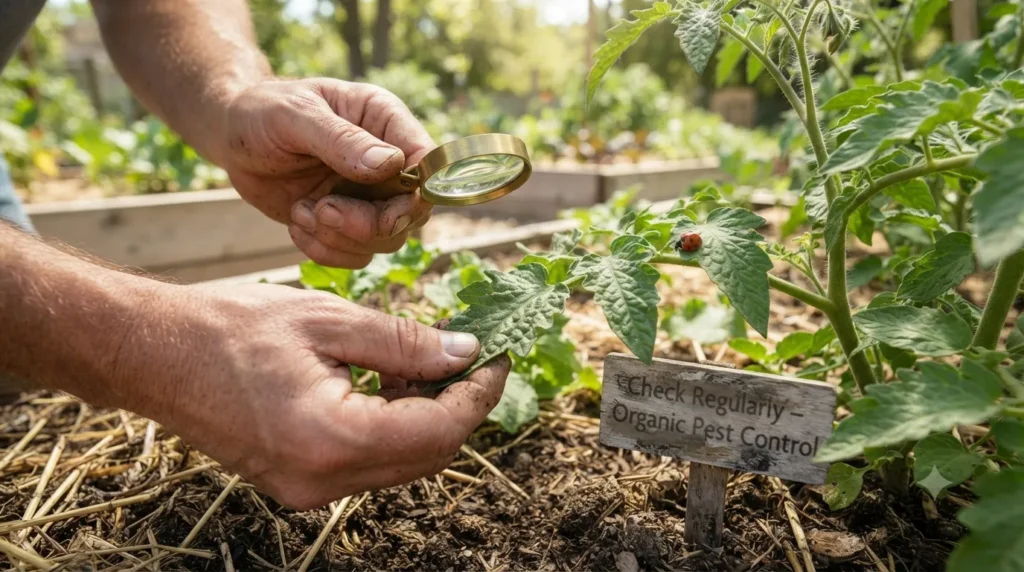
Healthy plants produce the best fruit. Stay vigilant .
Common Pests
- Tomato hornworms – and pick them off.
- Aphids – spray with water or insecticidal soap.
- Whiteflies – check undersides of leaves regularly.
Disease Prevention
- Water at the base, not leaves.
- Space plants for airflow.
- Rotate tomato crops to different beds each year.
- Remove diseased leaves immediately.
Harvesting Your Giants
Patience pays off. Don’t pick too early.
Harvest when:
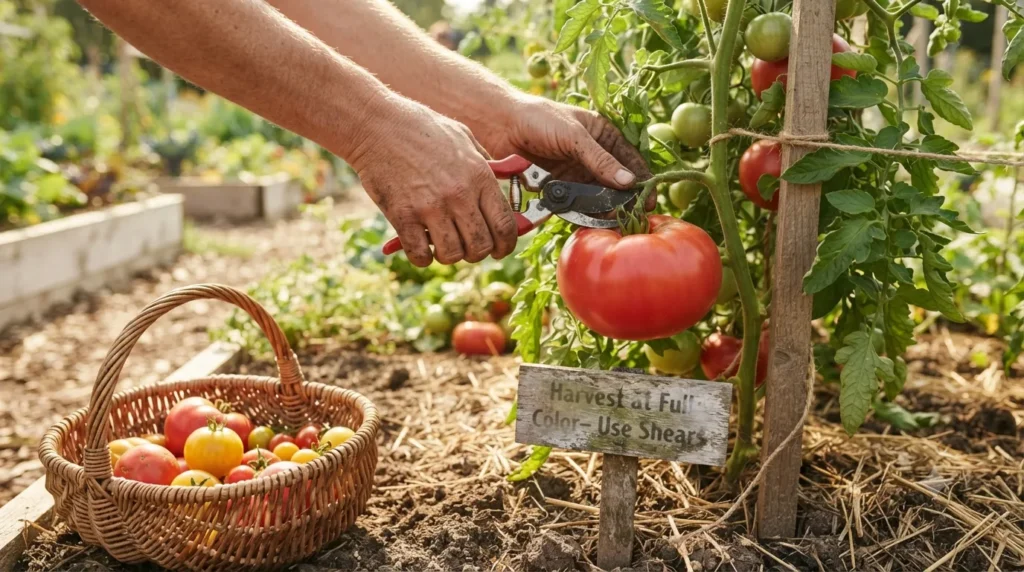
- The fruit has reached full colour.
- It yields slightly to gentle pressure.
- The skin changes from glossy to a more matte finish.
Use garden shears to cut the stem, leaving a small piece attached. Handle your giants carefully to avoid bruising.
You Might Like 5 Brilliant Raised-Bed Vegetable Garden Ideas and Layouts
Let’s Talk About Your Tomatoes
Now I want to hear from you.
What’s your biggest challenge with growing giant tomatoes—choosing the right variety, getting the soil right, or keeping them watered consistently? Drop a comment below or tag @ouladeco on Pinterest with a photo of your biggest tomato!
And if this guide helped you, save it, share it with a fellow gardener, and come back to Oula Deco for more gardening inspiration.

