You want a beautiful, green lawn. But your yard has a mix of sunny patches and shady corners. If you are struggling with patchy grass, selecting the best grass seed types for shade and sun is the simple solution you need. The grass that thrives in full sun will wither in the shade, and shade-loving grasses often fail in intense heat. By matching the best grass seed types for shade and sun to your yard’s unique light conditions, you can finally achieve that lush, professional-grade lawn.
Here’s the truth: the best grass seed types for shade and sun aren’t one-size-fits-all. The grass that thrives in full sun will wither in the shade, and shade-loving grasses can’t handle intense heat and foot traffic. The key is understanding your lawn’s light conditions and choosing a seed mix that matches.
I’ve gathered expert recommendations from turfgrass specialists and university extension services to help you make the right choice. From fine fescues for dense shade to Kentucky bluegrass for sunny spots, you’ll find the perfect seed for every part of your yard.
By the end of this guide, you’ll know exactly which grass seed types work best for your lawn, how to read seed labels, and how to plant for success.
Let’s explore the best grass seed types for shade and sun – one condition at a time.
Understanding Your Lawn’s Light Conditions
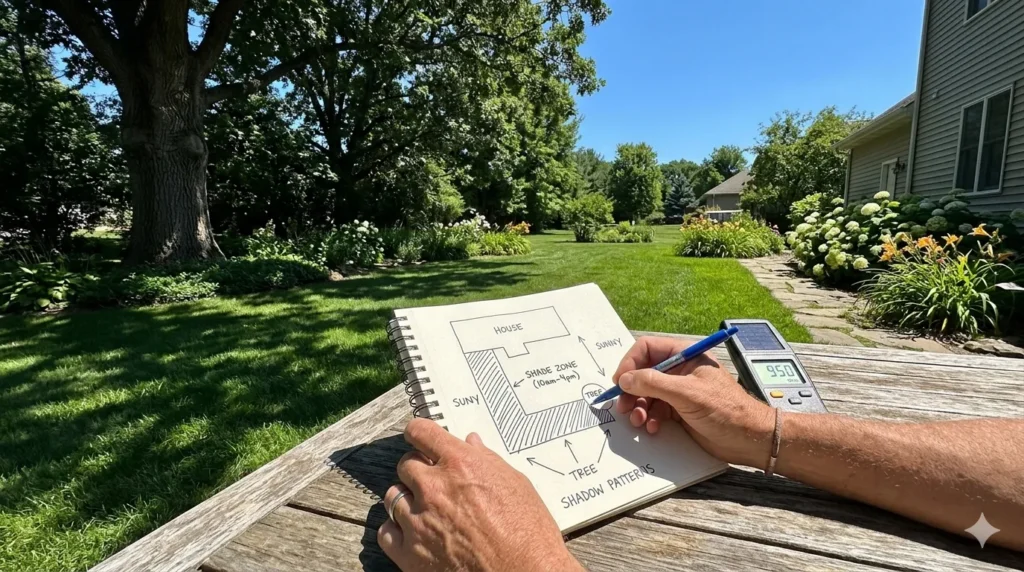
Before you buy any seed, assess the sunlight your lawn actually receives. This step is crucial for selecting the right grass types.
The three light categories:
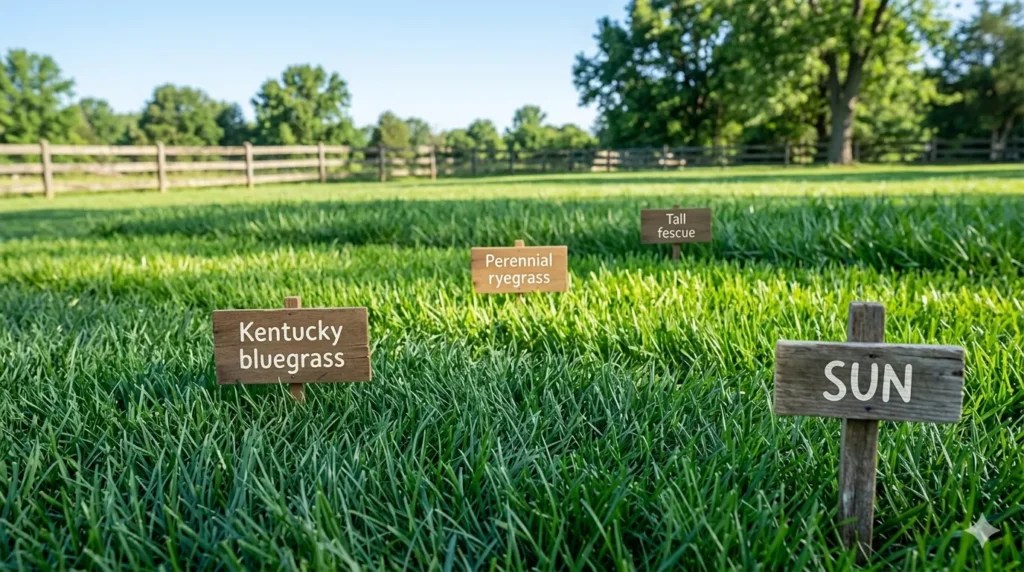
Full Sun: Areas that receive 6+ hours of direct sunlight per day. Grasses like Kentucky bluegrass thrive here.
Partial Sun/Moderate Shade: Areas that receive 4-6 hours of direct sun per day. Tall fescue and perennial ryegrass handle these conditions well.
Dense Shade: Areas that receive less than 4 hours of sun – or only dappled light through tree canopies. Fine fescues and specific shade-tolerant mixes can survive here.
Pro Tip: Watch your yard at different times of day. Note where shadows fall in the morning, noon, and late afternoon. This simple observation will guide your seed selection.
Pin-worthy tip: “The secret to a great lawn isn’t a green thumb – it’s matching the right grass to the right light.”
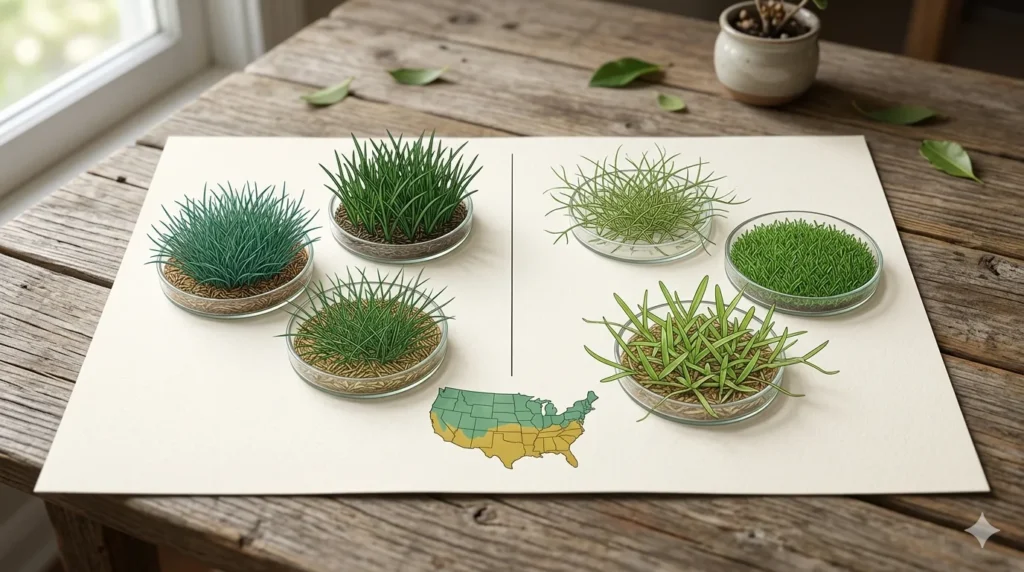
Cool-Season vs. Warm-Season Grasses
Your location determines which grass types will thrive.
Cool-Season Grasses (Best for Northern U.S.)
Grow actively in spring and fall when temperatures are 60-75°F.
Stay green year-round in cooler climates.
Include Kentucky bluegrass, tall fescue, fine fescues, and perennial ryegrass.
Warm-Season Grasses (Best for Southern U.S.)
Grow actively in summer heat (80–95°F).
Go dormant and turn brown in winter.
Include Bermuda grass, Zoysia grass, St Augustine grass, and centipede grass.
Transition Zone: If you live in the middle of the country, you can choose either type, but cool-season grasses often need more care in summer heat, and warm-season grasses need winter overseeding.
If your lawn gets 6+ hours of direct sun, these grasses perform best.
1. Kentucky Bluegrass
Kentucky bluegrass is the classic choice for sunny lawns. It has a rich blue-green colour and medium-fine texture and spreads through rhizomes to fill bare spots. It’s best for full sun and can tolerate light shade. However, it’s slow to germinate (15–21 days) and goes dormant in drought or extreme heat. Use a mix of at least 2–3 bluegrass cultivars for best results.
2. Perennial Ryegrass
Perennial ryegrass is the sprinter of the grass world – it germinates in just 7–10 days and establishes quickly. It has a fine texture, excellent foot-traffic tolerance, and handles both sun and partial shade well. It struggles in drought and extreme heat but works well as 10–20% of a sun mix to speed the establishment of slower bluegrass.
3. Tall Fescue
Tall fescue is a hardy, wide-bladed grass that tolerates heat, drought, and partial shade. It stays green through winter in many areas and adapts to various soil types with low maintenance needs. It grows in clumps and may need periodic reseeding but is an excellent choice for sunny and mixed-light lawns.
Pin-worthy tip: “Bluegrass loves sunshine, ryegrass loves speed, and tall fescue loves resilience – pick your lawn’s best friend.”
Best Grass Types for Shady Areas
Shade presents the biggest challenge. These grasses handle low-light conditions best.
1. Fine Fescues (The Shade Champion)
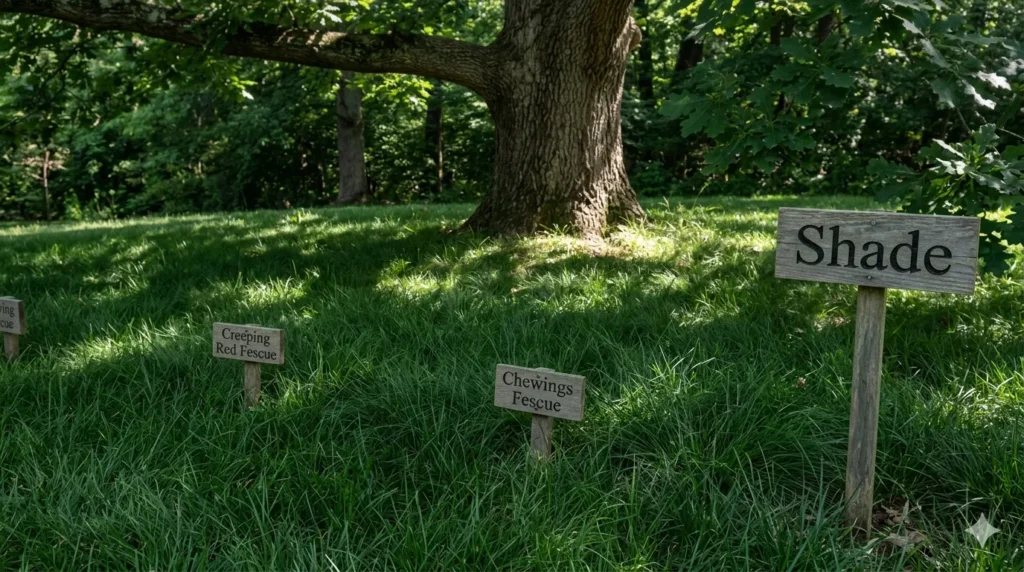
Fine fescues are the unsung heroes of shady lawns. They thrive in low-light conditions with deep root systems and slower growth rates. The family includes creeping red fescue, Chewings fescue, and hard fescue. They have fine, needle-like blades and require less mowing and water than sun-loving grasses.
Why they work: Fine fescues photosynthesise efficiently with minimal light and are drought-tolerant once established. They handle dense shade (2–6 hours of sun) and are ideal under trees and along north-facing walls.
2. St Augustine Grass (Warm-Season Shade Option)
If you live in a warm climate, St Augustine grass is your best bet for shaded areas. It has broad, coarse blades that form dense mats and handles warm, shaded spots well. It’s low-maintenance and thrives in southern regions with partial shade.
3. Zoysia Grass
Zoysia grass tolerates light shade and handles foot traffic better than St Augustine. It’s a warm-season grass that stays green longer than other warm-season varieties and is moderately shade-tolerant.
Pin-worthy tip: “Fine fescues don’t just survive in the shade – they dance in it.”
The Perfect Blend: Sun + Shade Seed Mixes
Why settle for one variety when you can have the best of both worlds? The best grass seed types for shade and sun are often found in high-quality professional blends. These mixes are engineered to provide maximum coverage regardless of whether your yard is hidden under a large oak tree or baking in the midday heat. By using a pre-mixed blend of the best grass seed types for shade and sun, you remove the guesswork and give your soil exactly what it needs to flourish
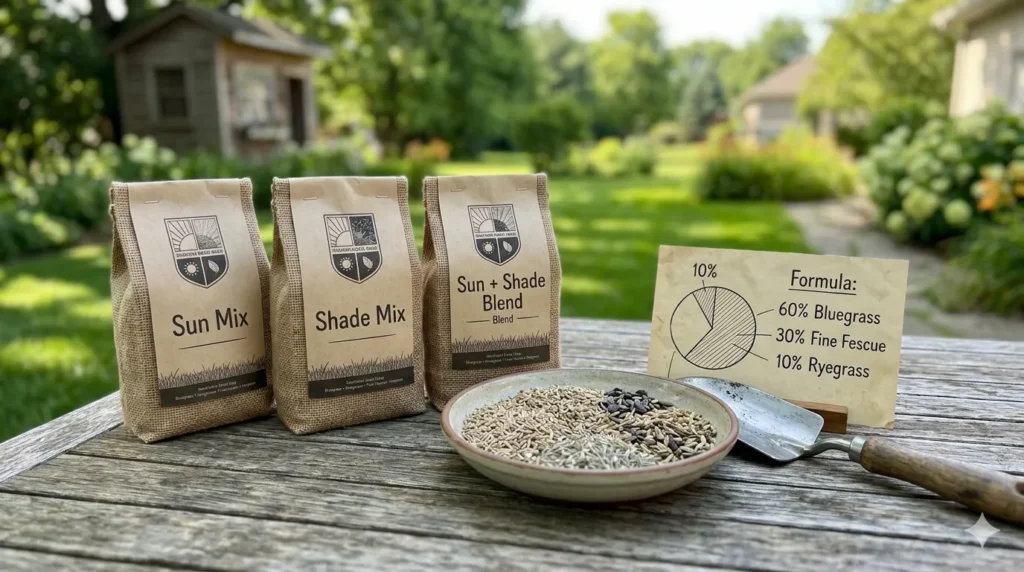
The ideal formula for mixed light conditions:
60% Kentucky bluegrass (for sunny areas)
30% Fine-leaf fescues (for shady areas)
10% Perennial ryegrass (for fast establishment)
This blend covers all your bases: bluegrass fills sunny spots, fescues thrive in shade, and ryegrass speeds germination across the whole lawn.
For dense shade: Look for mixes with 50–70% fine fescue, as these thrive with 2–4 hours of sun.
For sun-heavy lawns: Choose mixes with higher bluegrass content (30–40%) and ryegrass for durability.
Pin-worthy tip: “A good seed mix is like a good team – each member brings a unique strength to cover every part of the lawn.”
Popular Seed Mixes – What to Look For
When shopping, look for these quality indicators:
1. The Right Mix (Not a Monoculture)
Avoid 100% bluegrass or 100% fescue unless your lawn is entirely sun or entirely shade. Choose a blend of at least 3 species for resilience.
2. Premium vs. Economy
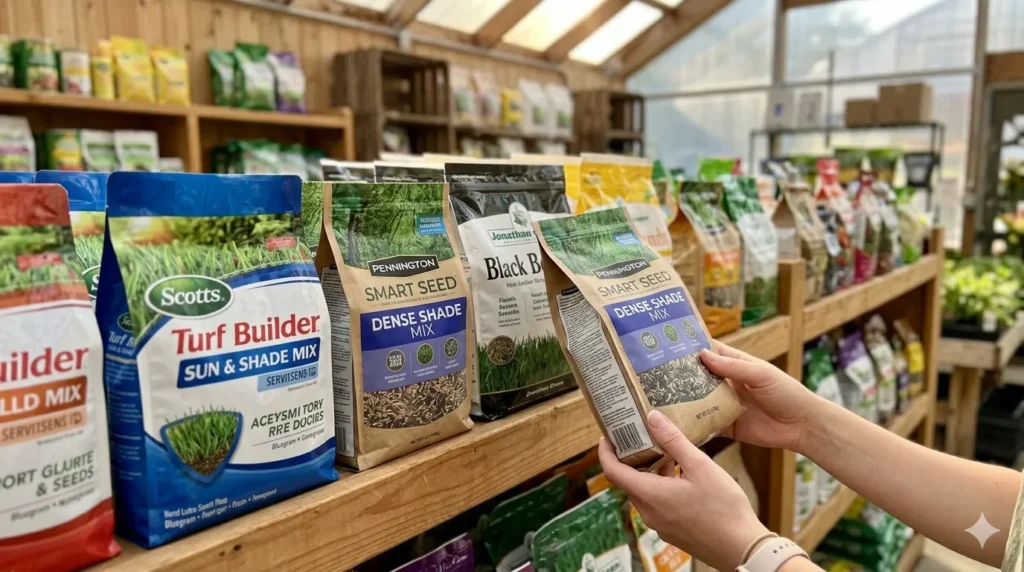
Premium mixes use improved grass varieties with better disease resistance, drought tolerance, and colour. Higher-end seed blends like Scotts Turf Builder Sun & Shade Mix offer shade tolerance in areas with 4+ hours of sun and include moisture-retaining coatings.
3. Coated vs. Uncoated Seed
Coated seed (like Pennington Smart Seed) includes fertiliser and moisture-retention coatings. They cost more but improve germination success. Uncoated seed is cheaper and offers more seed per bag.
Recommended products from expert reviews:
Product
Best For
Key Features
Scott’s Turf Builder Sun & Shade Mix
Mixed-light lawns
4+ hours sun; WaterSmart PLUS coating
Pennington Smart Seed Dense Shade Mix
Dense shade
2–6 hours sun; improved tall fescue
WaterSaver Grass Mixture (Tall Fescue)
Drought-prone areas
Rhizome spread and deep roots
Jonathan Green Black Beauty Dense Shade
Disease-prone shade
Endophyte-enhanced disease resistance
Seeding Tips for Success
Grass type matters – but so does planting technique.
1. Prepare the Soil
Remove debris and weeds.
Add 1–2 inches of compost or top dressing.
Rough up the soil surface so seed makes contact.
2. Seed at the Right Time
Cool-season grasses: Late summer to early fall (August–September) is ideal – warm soil + cooler air + consistent moisture = quick germination.
Warm-season grasses: Late spring to early summer (April–June).
3. Seed-to-Soil Contact is Crucial
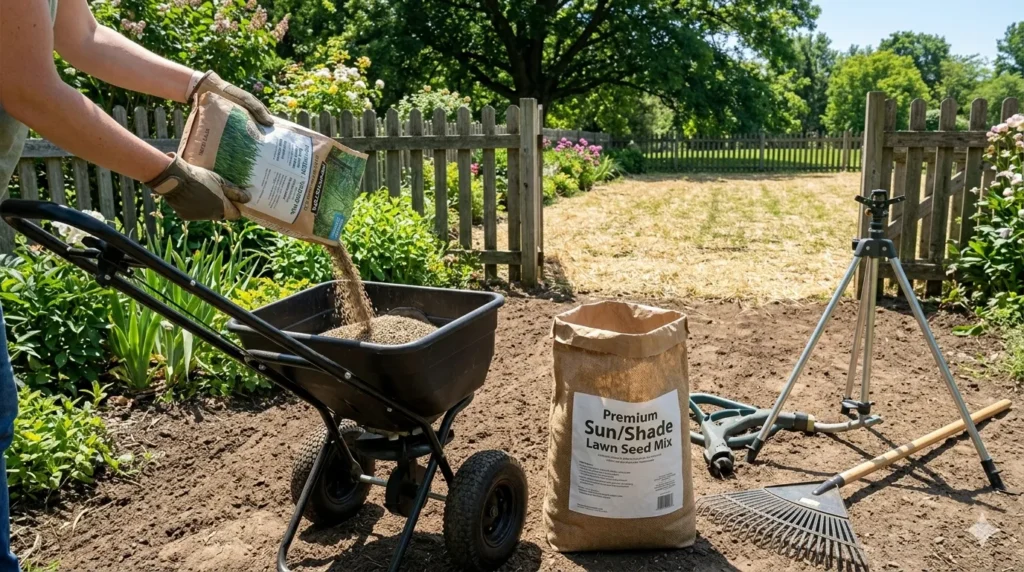
Use a spreader for even distribution.
Fan-rake lightly to mix seed into the top ¼ inch – don’t bury it.
Roll or press the area for good seed-to-soil contact.
4. Water Consistently (Don’t Skip This!)
Water lightly 2–4 times per day for the first 2 weeks.
Use a battery-operated timer sprinkler – short bursts of 10–20 minutes.
Keep top inch of soil moist until grass reaches 3 inches tall.
5. Wait for Establishment
Shade-tolerant grasses often take 3–4 weeks to germinate – be patient.
Avoid mowing until grass is 3–4 inches tall.
Pin-worthy tip: “Seed-to-soil contact and consistent moisture – the two non-negotiables of a successful lawn.”
Quick Reference: Best Grass Seed Types for Shade and Sun
Grass Type
Best Light Condition
Key Feature
Climate
Kentucky Bluegrass
Full sun (6+ hours)
Rich color, rhizome spread
Cool season
Fine Fescues
Dense shade (2–4 hours)
Thrives in low light
Cool season
Tall Fescue
Sun to partial shade
Drought- & heat-tolerant
Cool season
Perennial Ryegrass
Sun to light shade
Quick germination
Cool season
St Augustine
Warm-season shade
Broad blades, dense
Warm season
Zoysia
Light shade
Durable, moderate shade
Warm season
Pin-worthy tip: “Choosing the right grass is half the battle – the other half is patience, water, and time.”
Which of these best grass seed types for shade and sun are you planning to try? Drop a comment below or tag @ouladeco on Pinterest with a photo of your lawn!
And if this guide helped you, save it, share it with a friend who’s struggling with patchy grass, and come back to Oula Deco for more lawn and garden inspiration. Your lush, green lawn is just the right seed away.
Best grass seed types for shade and sun – fine fescue for shade, Kentucky bluegrass for sun, and tall fescue for mixed light. Save this complete guide! 🌱☀️🌳 #GrassSeed #LawnCare #OulaDeco
Lara King is a home makeover expert and founder of OulaDeco. She helps busy homeowners and renters create beautiful, stylish spaces without the high cost or full renovation. Her practical, design-driven advice has transformed thousands of rooms one affordable makeover at a time. 🏠✨