
Have you ever walked through a yard where water was moving, glinting, and trickling beside the path? Installing beautiful garden water features stays with you, offering soft sounds and shifting light. While large fountains can be loud, quiet garden water features like a narrow rill or a winding stream feel like they have always belonged in the landscape. Let’s explore how garden water features can bring that magical feeling home.
I’ve spent years visiting gardens, and the ones with moving water always leave the strongest impression. Not the big dramatic fountains that shout for attention, but the quiet ones: a narrow channel slipping through a border, a rocky stream disappearing under a fern. They feel like they’ve always been there.
Let’s talk about how you can bring that feeling home – even if you’ve never built anything like this before.
Understanding Different Garden Water Features: Rill vs. Stream
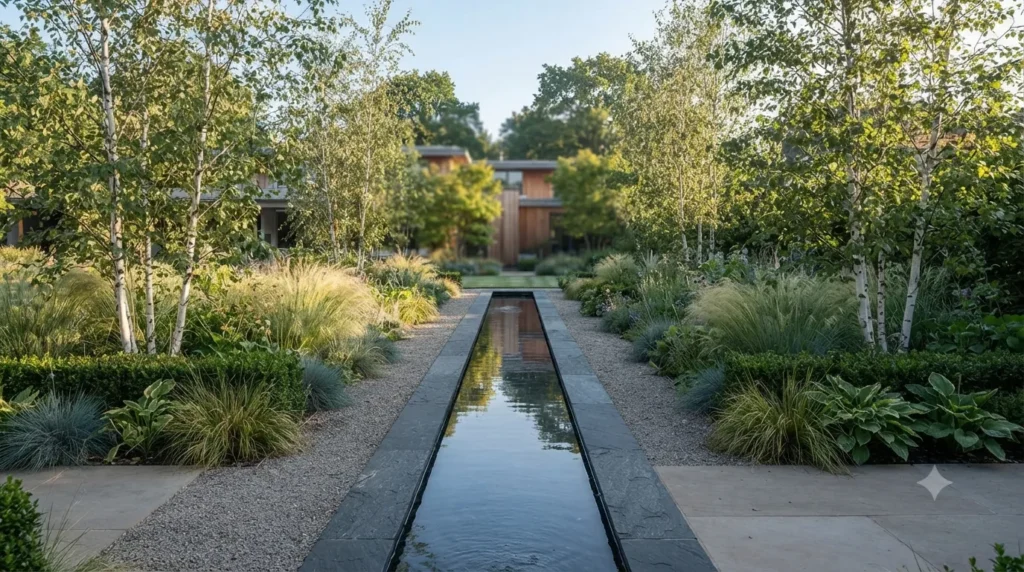
When planning garden water features, it helps to know the style options. A rill is a man-made, architectural channel, whereas a stream mimics a natural woodland brook. Choosing the right style for your garden water features sets the tone for your entire outdoor aesthetic.
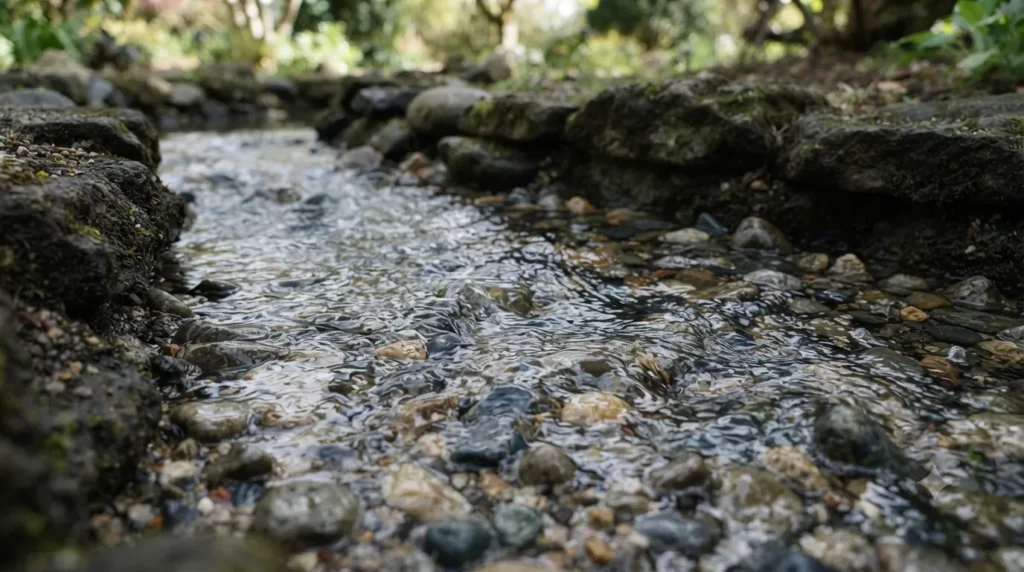
A stream, on the other hand, is meant to feel natural. It curves, it widens and narrows, and it spills over rocks. It mimics something you’d find in the woods, not something you’d sketch with a ruler.
Get more landscaping inspiration at Better Homes & Gardens
Which one should you choose?
- If your house is modern, clean-lined, or you love symmetry, go with a rill.
- If you prefer a loose cottage style or want to attract wildlife, a stream will feel more at home.
Why Rills Are Worth Considering
I know ‘rill’ sounds formal – maybe even a bit old-fashioned. But the modern versions are anything but.
One of my favourite garden visits was a tiny urban plot where the owner had run a narrow black steel channel straight through the middle of the lawn. It was maybe 20 centimetres wide and just a few centimetres deep. Water slipped through it like polished glass, reflecting the sky and the silver birches planted on either side.
It didn’t just look good. It made the whole garden feel bigger. That thin line of water stretched the eye, drawing it all the way to the back fence. The sound was minimal – just a soft whisper – but the effect was transformative.
The beauty of a rill is its simplicity.
It doesn’t need to be complicated. A straight line, a gentle slope, and a pump you can barely hear. The water does the rest.
Streams: Bringing the Woods to Your Garden
If a rill is about control and precision, a stream is about letting go.
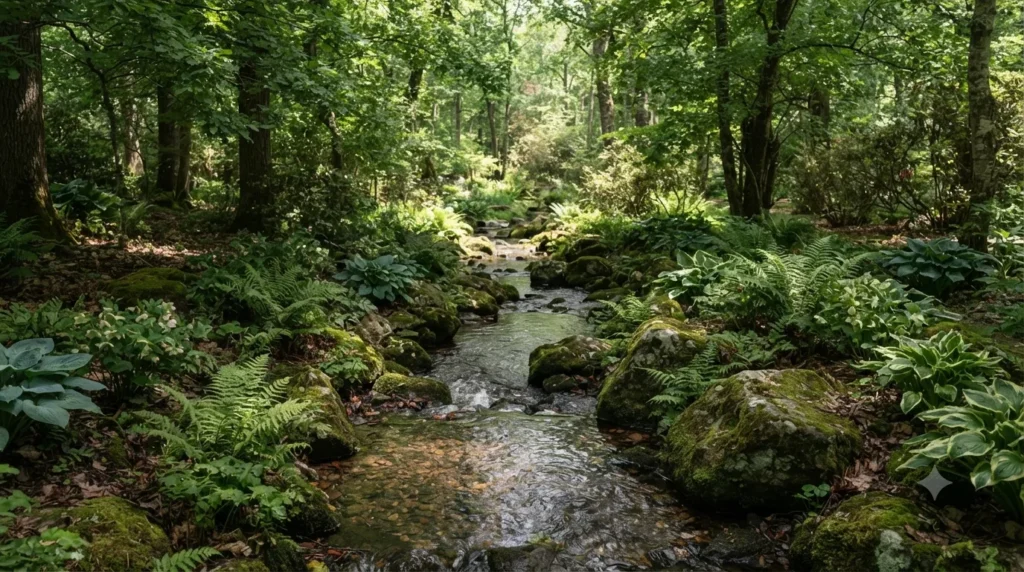
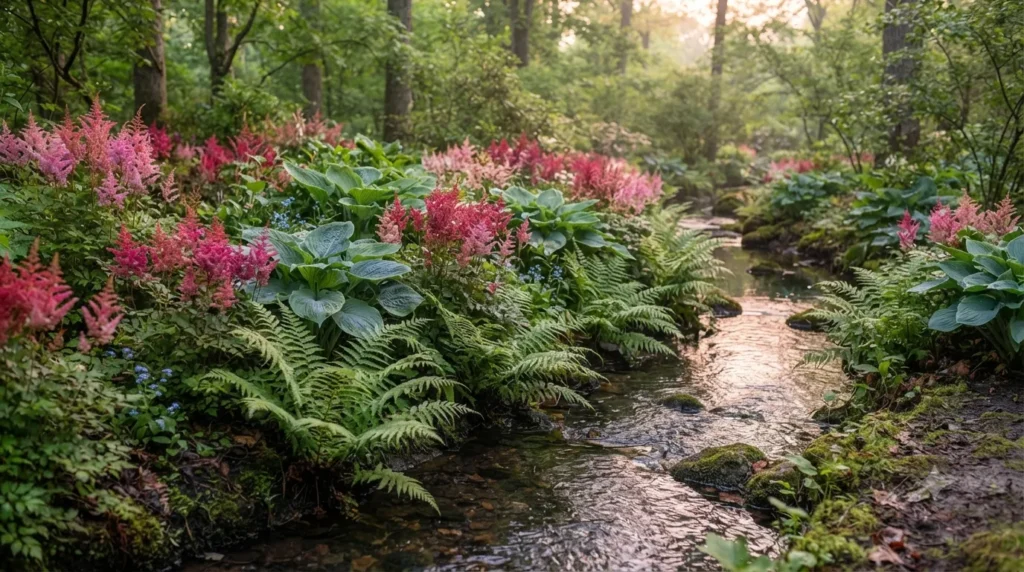
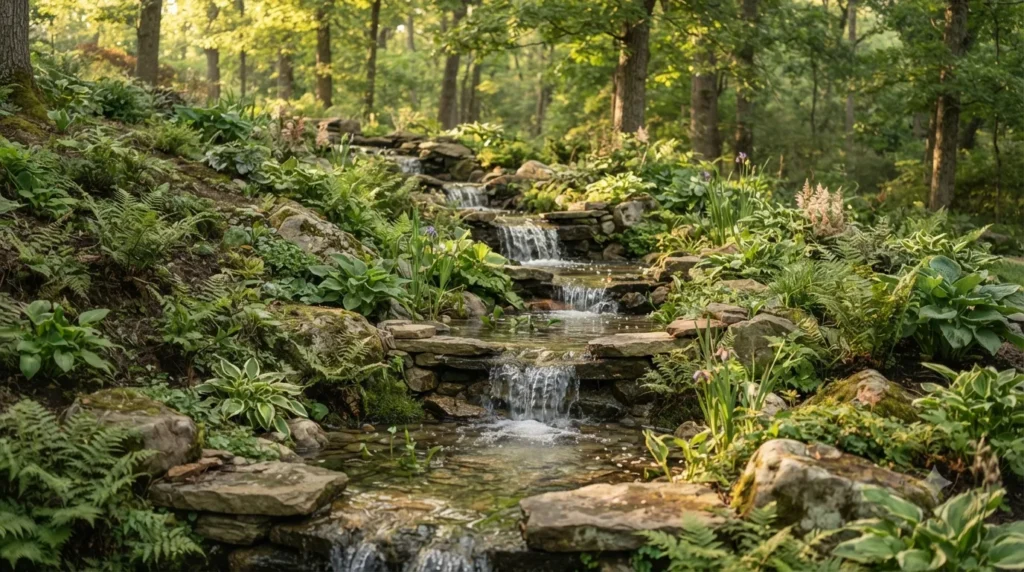
I remember a garden I visited in the Lake District where a stream had been carved through a shady corner, edged with mossy boulders and planted with ferns. The water tumbled over small drops, pooled in shallow basins, then carried on its way. It wasn’t loud, but you could hear it from the patio—a gentle, constant murmur that covered up the distant road noise.
What made it work was the planting.
The owner hadn’t just dug a ditch and filled it with water. They’d tucked astilbes along the banks, their feathery pink plumes softening the edges. Hostas sat in broad clumps, their leaves catching the spray. A few stepping stones crossed the stream in the narrowest spot, inviting you to slow down and look closer.
It felt ancient, as if it had always been there.
Small Space Garden Water Features That Pack a Punch
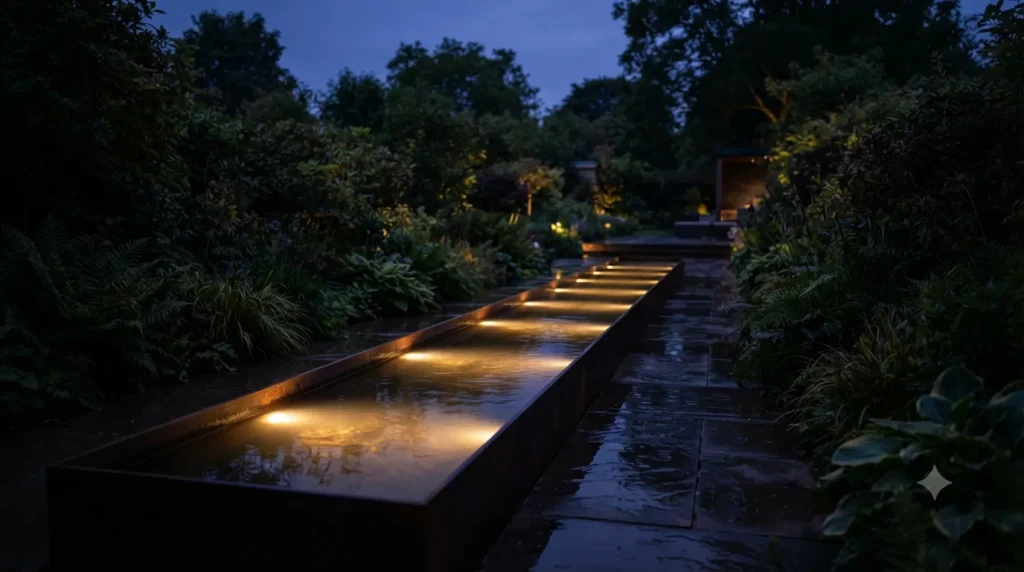
You don’t need a huge yard to enjoy garden water features. Container cascades and wall-mounted troughs allow you to incorporate compact garden water features on balconies, patios, or narrow side passages.
Container Cascades
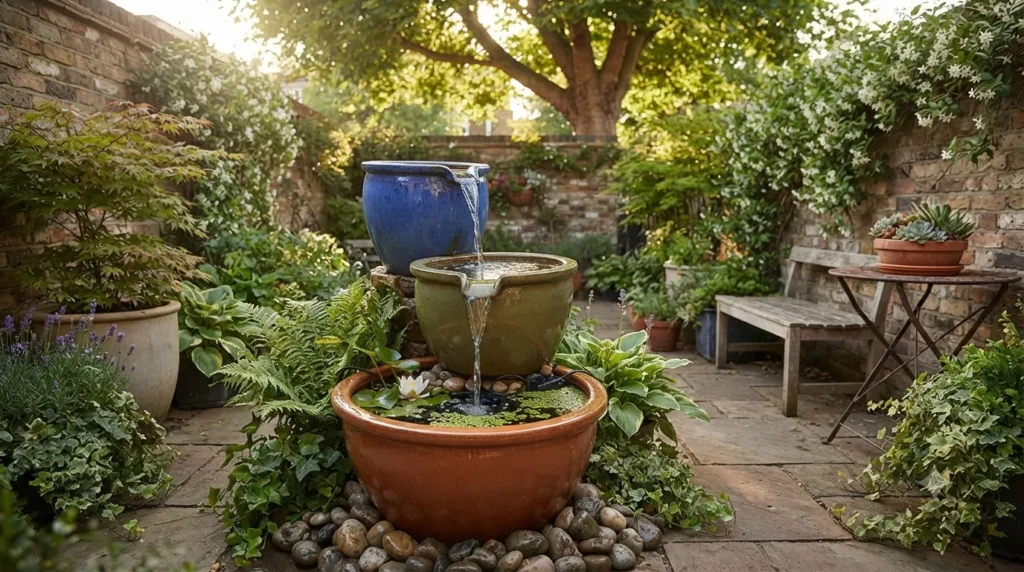
On a patio, you can create a miniature cascade using a stack of glazed pots. Water dribbles from the top pot into the next, then the next, finally collecting in a hidden reservoir at the base. It’s charming, easy to assemble, and takes up almost no floor space.
One friend of mine used three mismatched ceramic bowls at different heights, supported on bricks. The pump was tucked into the lowest bowl, hidden under a layer of pebbles. When the water trickled down, it sounded like rain on leaves—soft and deeply calming.
Wall-Mounted Rills
If you have a bare wall, consider a narrow stainless steel trough mounted horizontally. Water flows along it, then spills over the far end into a small basin below. It’s sleek, architectural, and surprisingly easy to install.
Materials That Look Good and Last
The materials you choose will shape the character of your water feature. Here’s what works well:
| Material | Vibe | Best For |
|---|---|---|
| Slate or granite | Sleek, reflective, timeless | Formal rills, modern gardens |
| Natural stone (sandstone and limestone) | Warm, rustic, organic | Woodland streams, cottage gardens |
| Stainless steel | Ultra-modern, industrial | Contemporary homes, narrow spaces |
| Copper | Warm, develops patina over time | Modern designs, statement pieces |
| Concrete | Versatile, customisable | Bespoke designs, curved shapes |
One thing I’ve learned: dark materials work best for rills. Water reflects more when the channel beneath it is dark. Light-coloured stone or pale concrete can make the water look murky or thin. Slate, dark granite, or painted metal gives you that glassy, mirror-like effect.
Design Lessons I’ve Learned
1. The Slope Is Everything
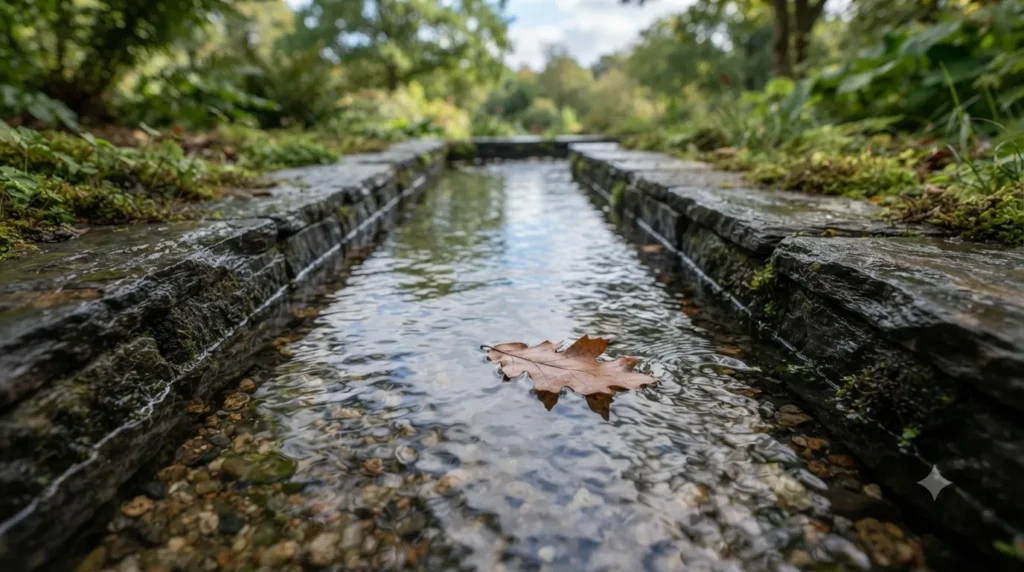
Water flows slowly downhill. If your channel is too steep, it races and splashes. If it’s too flat, it stagnates. Aim for a gentle drop—about 1 to 2 centimetres per metre. That’s enough to keep the water moving without turning it into a rapid.
2. Hide the Pump
The pump needs to be accessible for maintenance, but you don’t want to see it. Tuck it into a small sump at the bottom end, covered with a metal grate or a layer of pebbles. The water will hide the rest.
3. Add a Weir
At the top of your rill or stream, fit a small weir—a low lip over which water spills. It creates a clean start to the water flow and prevents backflow. A flat piece of stone works perfectly.
4. Use Recirculating Water
Both rills and streams use the same water over and over. A pump at the bottom sends it back to the top. No need for a fresh supply once it’s full, aside from occasional top-ups.
5. Lighting Transforms It
A few warm LED lights tucked into the water or aimed at the flow from below turns a daytime feature into something magical at night. The water catches the light and shimmers.
Planting Along the Water
The best water features don’t just sit there—they’re held by plants.
For Rills:
Keep it simple. A row of low box balls or a single tall grass at each end works well. Since rills are architectural, they don’t need dense planting. The water is the star.
For Streams:
Go wild. Ferns, hostas, astilbes, irises, and sedges all thrive in damp conditions. Let them drape over the edges and soften the stones. In a woodland setting, everything looks more natural when it’s a little overgrown.
Cost and Complexity
Rills and streams are easier to build than they look.
A basic recirculating rill can be installed in a weekend if you plan carefully. The main costs are:
- Flexible pond liner (EPDM is best)
- A submersible pump (size depends on flow rate and length)
- Stone or edging material
- Pebbles for the base
Total cost for a small rill: around £200–£400 if you do it yourself. A stream will be similar, depending on the length and volume of rock.
Hiring a landscape professional is another option if you want something more polished.
What I’ve Learned About Maintaining Them
They’re not high-maintenance, but they do need a little care:
- Check the water level weekly. Top up if needed.
- Clear leaves and debris before they block the pump.
- Clean the pump filter every few months.
- In freezing weather, drain the system or run the pump continuously to prevent ice damage.
Final Thoughts
There’s something about flowing water that changes a garden. It’s not just the sound, or the light, or the feeling of cool air rising from the surface. It’s that water makes a place feel alive. It reminds you that the garden is not static – it’s moving, changing, breathing.
Whether you choose a sleek rill that cuts through a lawn or a winding stream tucked under ferns, you’re adding something that will give you joy every time you step outside.
You Might Like Luxury Garden Decor: 7 Brilliant Tips for an Elegant Backyard
Let’s Talk About Your Water Feature
Now I want to hear from you. Have you ever built a water feature in your garden? What draws you more-the clean lines of a rill or the natural feel of a stream? Drop a comment below or tag @ouladeco on Pinterest with a photo of your garden.
And if this guide inspired you, save it, share it with a fellow gardener, and come back to Oula Deco for more outdoor ideas.

